
Country Loaf with Sourdough Discard, Yeast, and Fresh Milled Flour
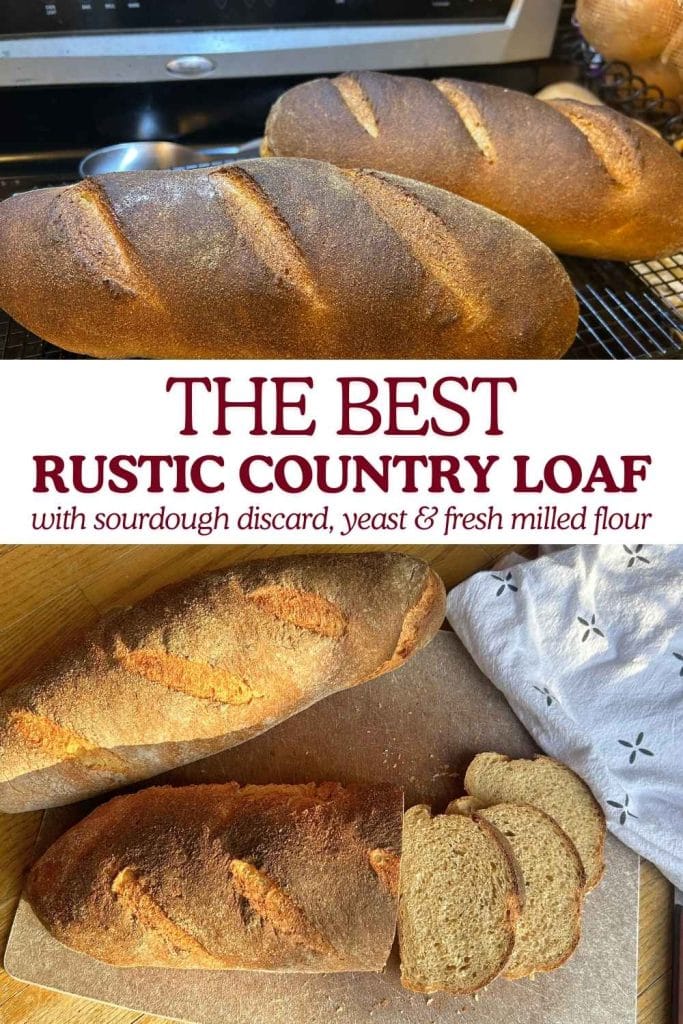
Looking for another way to use up some of your unfed sourdough discard? This country loaf uses your discard along with biga (a preferment) and yeast to make a truly delightful bread. It’s soft and fluffy, yet hearty and rustic.
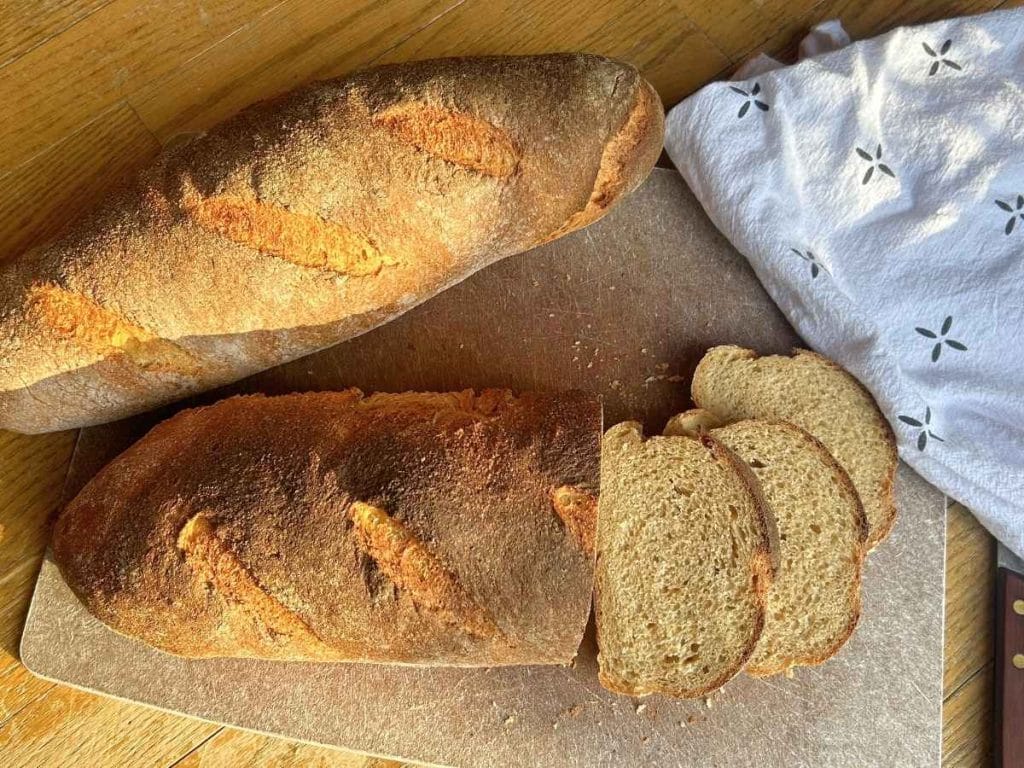
I created this bread when I was looking for recipes for a simple and soft whole wheat bread for my kids who love a big, fluffy loaf to tear into. Sometimes that can be hard to come by with fresh milled whole wheat!
These loaves are a testament to the simplicity and beauty of bread-making. When fresh milled flour is used, the experience is elevated, giving your bread top-notch taste, texture, and nutrition.
Need more whole wheat sourdough recipes? Try making Sourdough French Bread, 100% Fresh Milled Sourdough Bread, Sourdough Buttermilk Biscuits, Sourdough Overnight Sandwich Bread, Sourdough Bagels, Sourdough English Muffins, Sourdough Challah, Sourdough Sticky Pecan Buns, Sourdough Focaccia, Sourdough Apple Pie Cobbler, or Sourdough Pretzel Buns.
Looking for yeasted bakes? Try some of our favorites, like Fresh Milled Milk Bread, Dinner Rolls, Crescent Rolls, Texas Roadhouse Rolls, English Muffins, Hawaiian Rolls, or Ciabatta Rolls.
This post contains affiliate links. As an Amazon associate or other affiliate, I earn from qualifying purchases. We try to recommend products we personally use or have used and trust. If you choose to purchase through our links in this post, we may receive a commission, at no extra cost to you. Read the full disclosure here.
Why You’ll Love this Fresh Milled Flour Country Loaf
Let me introduce you to the rustic charm of a fresh milled country loaf that has become a staple on our table. This perfect (in our humble opinion) loaf is a simple yet beautiful way to make bread and the perfect player for soup nights.
Freshly milled flour retains all the nutrients and oils of the whole grain, making it far superior to store-bought flour in terms of nutrition and flavor. The active enzymes in freshly milled flour also aid in fermentation, resulting in a beautifully fluffy loaf and a crust that is perfection. 100% whole wheat never tasted so good.
Super Soft: Thanks to the combination of biga, yeast, and sourdough discard, this loaf is light and airy while still maintaining the whole grain benefits!
No Waste: Sometimes I just end up with discard sitting in my fridge, and this is the perfect way to not let it go in the garbage.
What is Biga?
In the most basic terms, it’s a pre-fermented dough. Biga is made of flour, water, and a small amount of yeast. This mixture is then left to ferment at room temperature overnight before being added to the final dough or refrigerated up to 1-3 days to use later. Learn more here.
Other dough helping methods I like to use include Tangzhong and Yudane.
Why Use Sourdough Discard, Biga, and Yeast in This Recipe
In this recipe, I combine three leavening methods: sourdough discard, biga (a type of pre-ferment), and a small amount of commercial yeast. Each plays a unique role:
- Sourdough Starter: Provides flavor and enhances the bread’s natural fermentation (plus it can help with digestion). I usually just use my cold, unfed starter from the back of the fridge!
- Biga: Adds a subtle depth to the bread’s flavor and helps with its structure. Learn more about What is Biga?
- Yeast: Ensures a reliable and consistent rise, especially when working with whole grains, which can sometimes be more challenging.
This combination results in a loaf that is flavorful, airy, and beautifully textured. You’ll want to tear right in when you pull these out of the oven.
Sourdough Discard Country Loaf Recipe
Tools
- Grain Mill
- Stand Mixer with Dough Hook Attachment
- Kitchen Scale
- Dough whisk
- Bench scraper
- Plastic Wrap
- Baguette Pan or baking sheets
- Baking/Pizza Stone
- Parchment Paper
- Bread lame or sharp knife
- Rice Flour for dusting
- Cooling Rack
- Kitchen Thermometer
Key Ingredients
Biga
- 120 grams Hard White Wheat
- 80 grams Cool Water
- 1.5 grams Active Dry Yeast (about 1/2 teaspoon)
Dough
- 350 grams Water
- 500 grams Hard White Wheat
- 20 grams Maple Syrup
- 200 grams Biga (all of the prepared pre-ferment)
- 200 grams Sourdough Discard
- 12 grams Active Dry Yeast
- 20 grams Salt
- Butter for brushing after baking (optional)
Notes
- Any type of sourdough starter will work: fed, unfed, cold, room temp, etc.
Step-by-Step Sourdough Country Loaf Recipe with Fresh Milled Flour
Preparing the Biga: The night before you plan to bake, make your biga by combining the flour, water, and yeast and knead into a ball. Cover and let sit on the counter overnight, 8-10 hours.
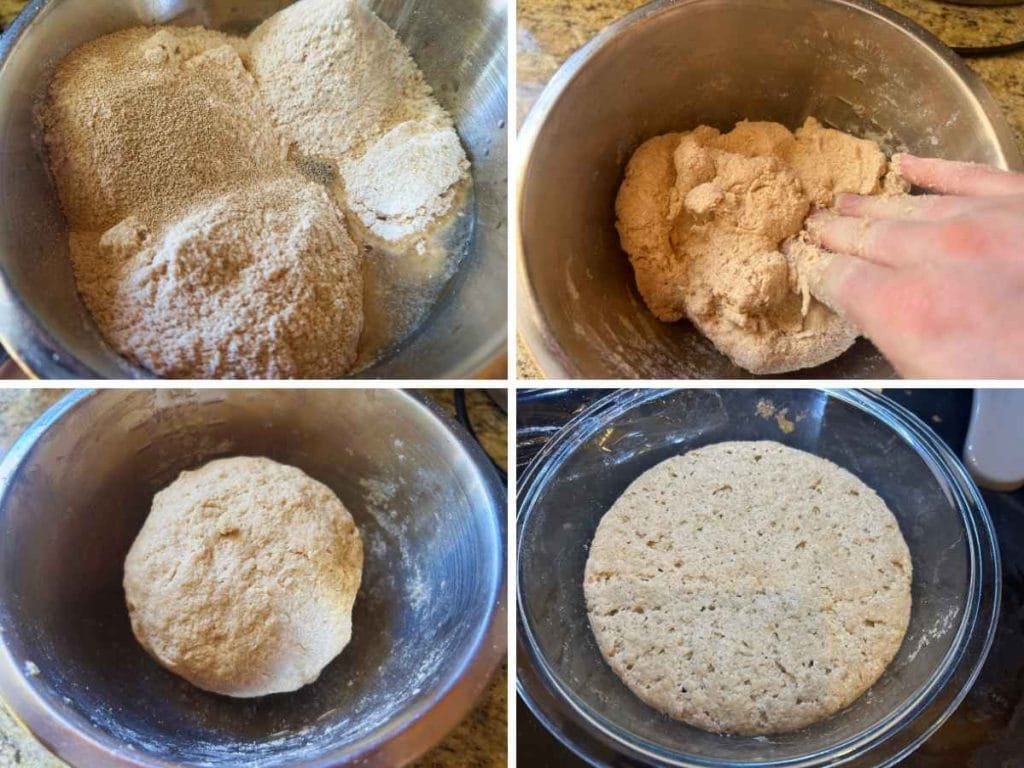
Autolyse: Combine flour, water, and maple syrup into a shaggy dough. Cover and let rest for 30-60 minutes.
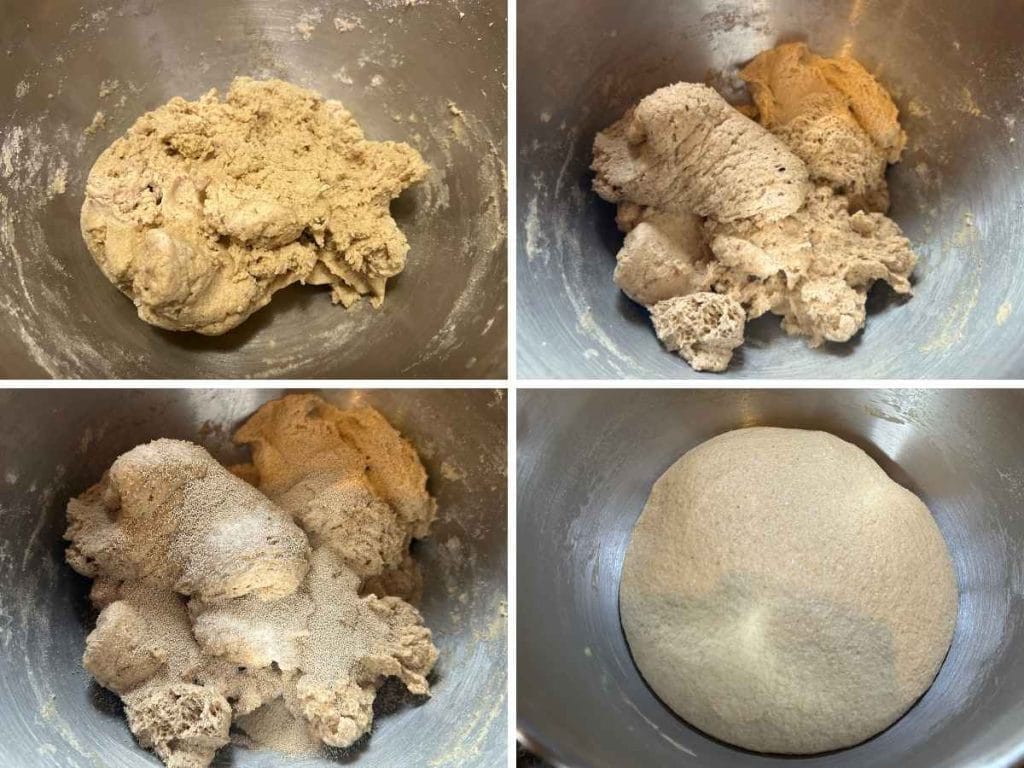
Mixing the Dough: Add sourdough, biga, salt, and yeast to your dough and knead for 5-10 minutes, or until windowpane is reached (or nearly).
Bulk Fermentation: Cover and let rise for 1-2 hours (depending on room temperature).
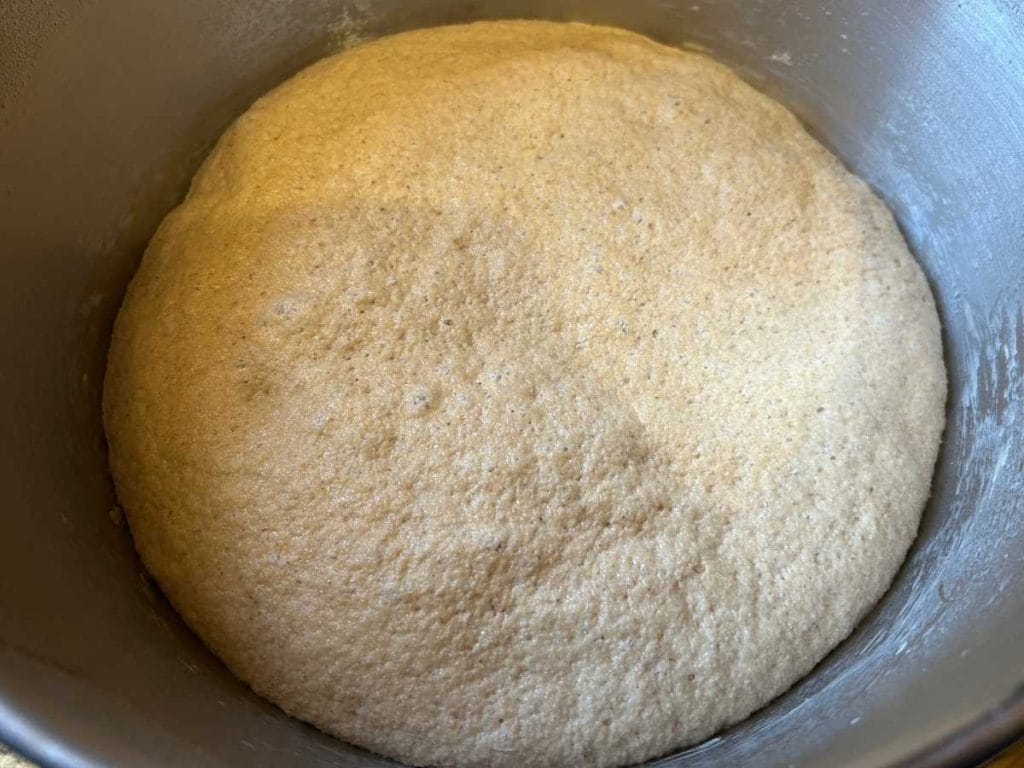
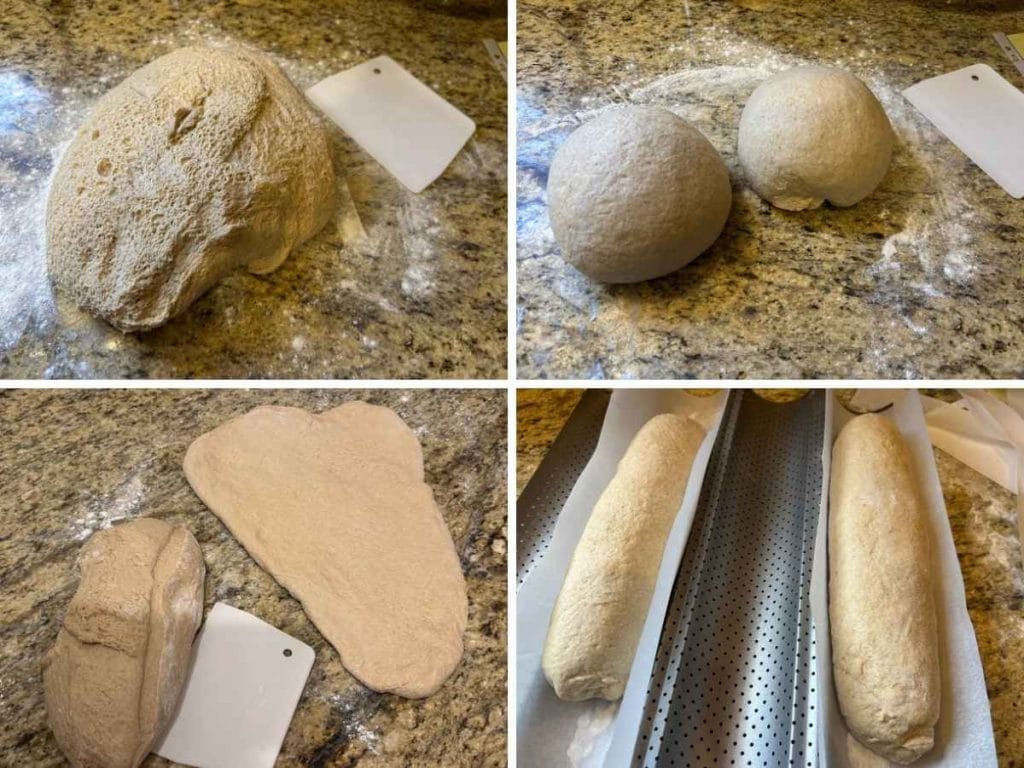
Shaping the Loaves: Dump dough onto a lightly floured surface, divide into 2 pieces, and shape into balls. Cover and let rest 15 minutes. Perform final shape and place on dusted parchment paper on a baguette pan if you have one (this helps keep the shape, but it is not necessary).
Second Rise and Preheat: Cover and let rise 30-60 minutes, or until it passes the poke test. Near the end of rising, maybe 10-15 minutes before it’s done, preheat your oven to 475 degrees with a baking stone and a small pan of water (to help steam).
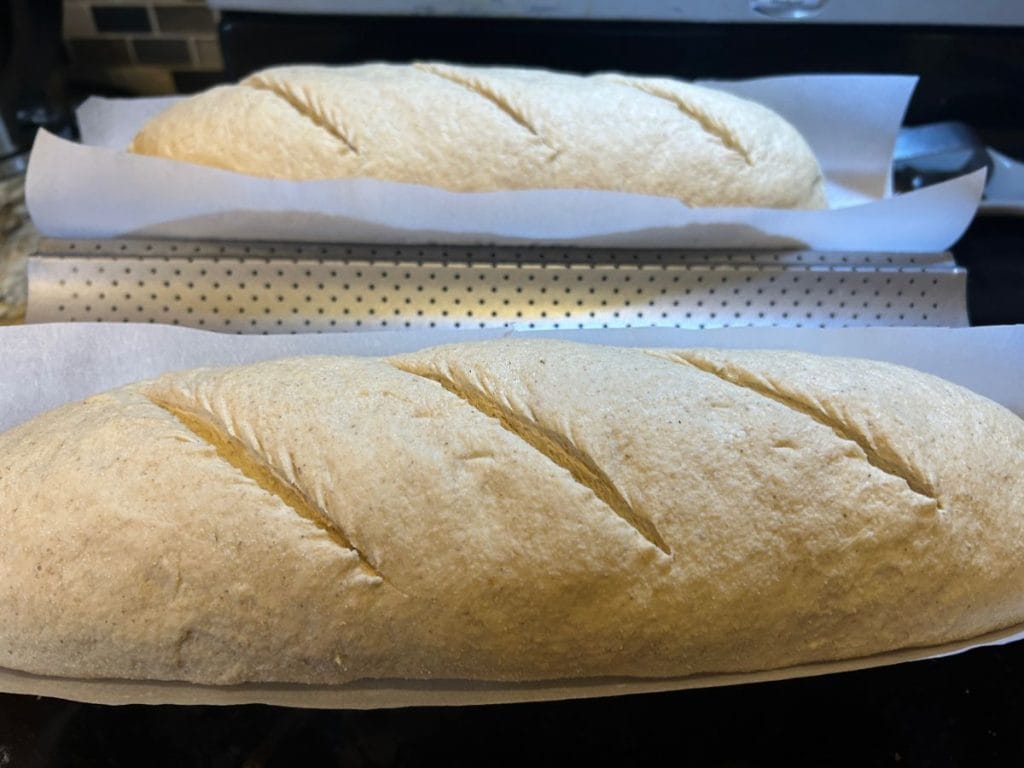
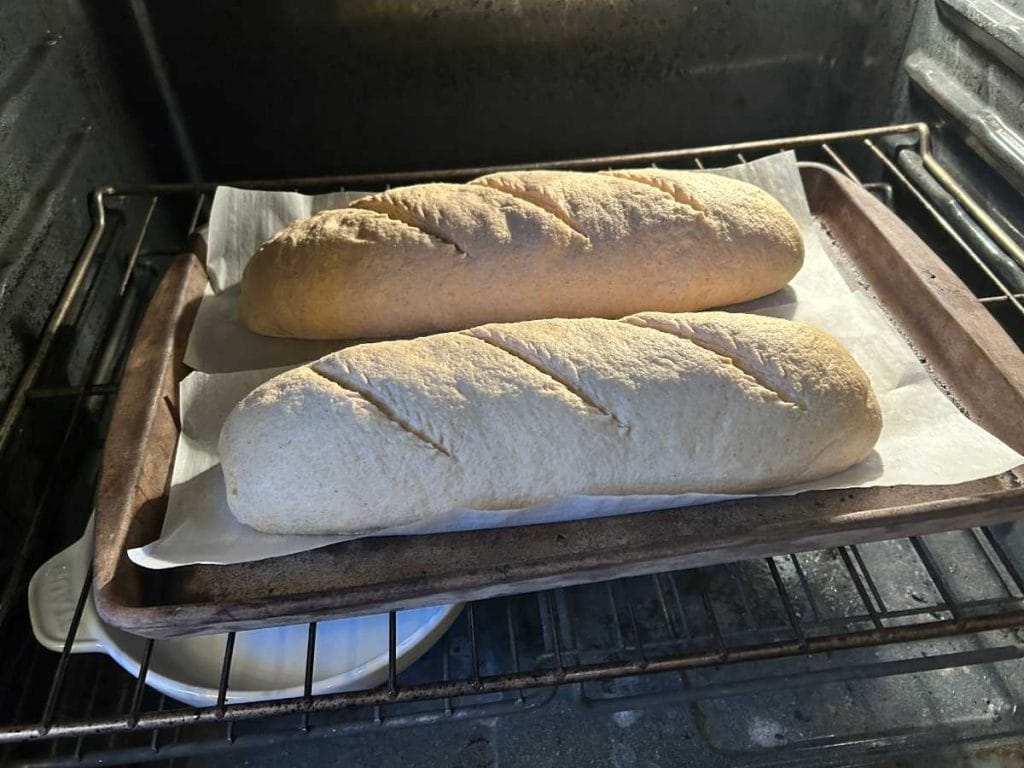
Bake: Score loaves as desired, then place them, still on parchment paper, onto the baking stone. Bake for 21-24 minutes, or until browned and internal temperature reaches 200 degrees. If the top of the bread is browning too fast, you can tent with foil.
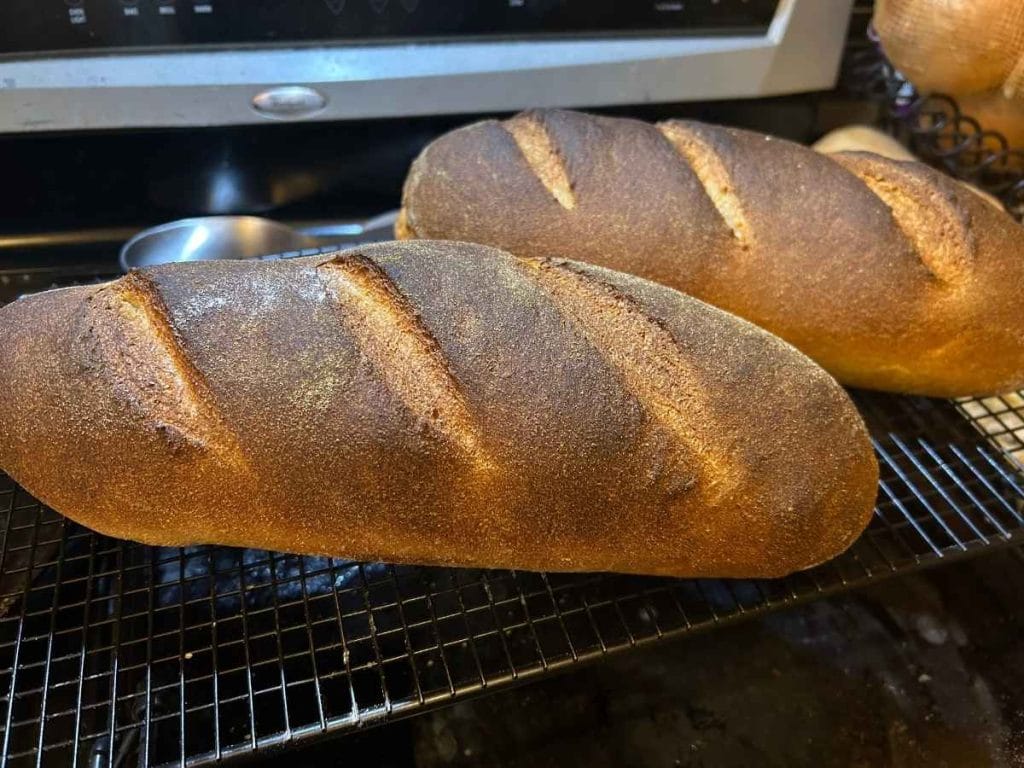
Cool: Remove and place on a cooling rack. You can brush with melted butter if desired for a softer crust. Try not to cut until fully cooled!
Storing and Serving Your Sourdough Country Loaf
Let bread cool before slicing, or it may become gummy. But don’t let me tell you what to do! If you want to tear right in you go ahead. Serve with butter, cheeses, or hearty soups for a comforting meal.
Store your loaf in a bread bag, cake dome, or wrapped in a towel at room temperature. For longer storage, slice and freeze the bread.
Troubleshooting Common Issues
- Dense Loaf: Increase hydration or extend the bulk fermentation time a bit.
- Over-proofing: Shorten proofing time, especially in warmer environments.
- Under-proofing: Ensure the dough has doubled in size before baking.
- Mis-Shapen or Exploding Loaves: This could be from over or under proofing, or you may just need to make deeper cuts when you score to allow the bread to expand where you want it to.
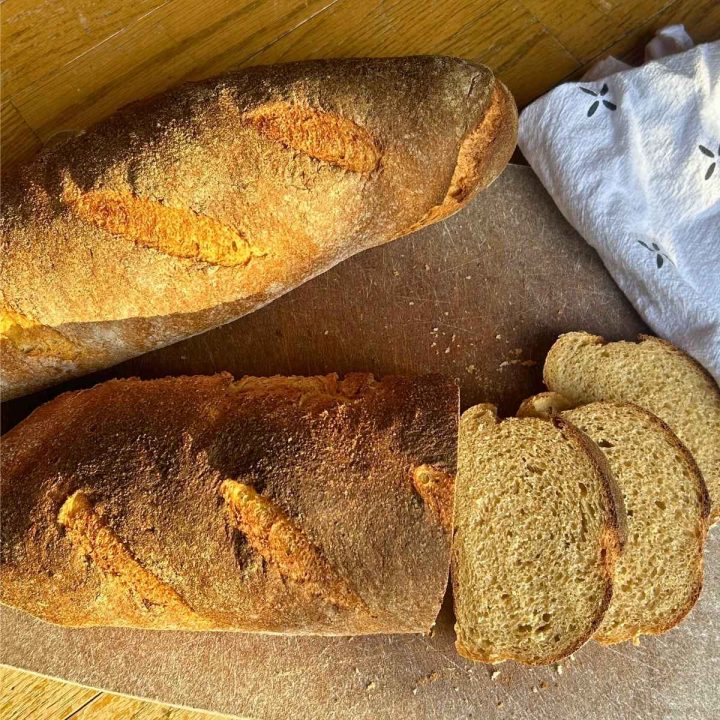
Country Loaf with Sourdough Discard, Yeast, and Fresh Milled Flour
Learn to bake a soft country loaf using sourdough discard, yeast, and fresh milled flour. This recipe is flavorful, fluffy, and crusty!
Ingredients
Biga
- 120 grams Hard White Wheat
- 80 grams Cool Water
- 1.5 grams Active Dry Yeast (about 1/2 teaspoon)
Dough
- 350 grams Water
- 500 grams Hard White Wheat
- 20 grams Maple Syrup
- 200 grams Biga (all of the prepared pre-ferment)
- 200 grams Sourdough Discard
- 12 grams Active Dry Yeast
- 20 grams Salt
- Butter for brushing after baking (optional)
Instructions
- Preparing the Biga: The night before you plan to bake, make your biga by combining the flour, water, and yeast and knead into a ball. Cover and let sit on the counter overnight, 8-10 hours.
- Autolyse: Combine flour, water, and maple syrup into a shaggy dough. Cover and let rest for 30-60 minutes.
- Mixing the Dough: Add sourdough, biga, salt, and yeast to your dough and knead for 5-10 minutes, or until windowpane is reached (or nearly).
- Bulk Fermentation: Cover and let rise for 1-2 hours (depending on room temperature).
- Shaping the Loaves: Dump dough onto a lightly floured surface, divide into 2 pieces, and shape into balls. Cover and let rest 15 minutes. Perform final shape and place on dusted parchment paper on a baguette pan if you have one (this helps keep the shape, but it is not necessary).
- Second Rise and Preheat: Cover and let rise 30-60 minutes, or until it passes the poke test. Near the end of rising, maybe 10-15 minutes before it's done, preheat your oven to 475 degrees with a baking stone and a small pan of water (to help steam).
- Bake: Score loaves as desired, then place them, still on parchment paper, onto the baking stone. Bake for 21-24 minutes, or until browned and internal temperature reaches 200 degrees. If the top of the bread is browning too fast, you can tent with foil.
- Cool: Remove and place on a cooling rack. You can brush with melted butter if desired for a softer crust. Try not to cut until fully cooled!
Notes
- Any type of sourdough starter will work: fed, unfed, cold, room temp, etc.
Nutrition Information
Yield 24 Serving Size 1Amount Per Serving Calories 113Total Fat 1gSaturated Fat 0gUnsaturated Fat 1gSodium 372mgCarbohydrates 23gFiber 4gSugar 1gProtein 5g
*This has not been evaluated by the FDA. Nutrition Label may not be accurate. This label has been automatically pulled, and ingredients may not be categorized correctly.
FAQS
Yes, this bread freezes very well. Wrap loaf in plastic wrap and then place in a freezer bag. Freeze for 2-3 months. When ready to eat, remove plastic wrap from bread and leave in freezer bag (unsealed) on counter to thaw, or wrap in foil and reheat in a 350-degree oven for approx. 30 minutes.
Totally, it will take a little longer to reach a soft, stretchy dough, but the results are just as delicious.
Each one brings something different: the discard adds flavor, the biga adds structure, and the yeast ensures a reliable rise — especially with whole grains. You could omit one, but the texture and rise will change, and you may need to make other ingredient adjustments. For the most consistent loaf, keep all three.
The dough should look puffed or domed, feel lighter and jiggly, and show small bubbles on the surface. It won’t always double perfectly, but it should look noticeably risen after 1–2 hours depending on room temperature.
Yes. Hard red wheat will give the loaf a deeper, nuttier flavor and a slightly darker crumb. The flavor may be a little heartier.
You can replace it with honey or even a small amount of sugar. If you omit the sweetener entirely, the loaf will still work — it may just brown a little less.




What an excellent tutorial on how to long ferment grains without a sourdough starter and make a delicious, rustic bread. How is the flavor compared to a sourdough bread? Similar or a little less tangy?
This looks so delicious! Thanks for sharing!
I’ve never made bread this way before, and I’m definitely interested in trying it. Thanks for sharing!
This is great! I’m getting ready to start my sourdough starter back up. Saving this for later! 🙂
This looks so soft and delicious and the combination of sourdough and yeast sounds really interesting. I’d love to try it!
I have struggled getting my freshly milled breads to rise, whether using sourdough or yeast. Maybe this is the recipe I need to try! Pinning to try! Thanks for sharing!!