
Simple Whole Wheat Sourdough Bread with Fresh Milled Flour
This simple 100% whole wheat sourdough bread made with fresh milled flour is delicious, soft, and crusty! You’ll be baking this recipe on repeat.
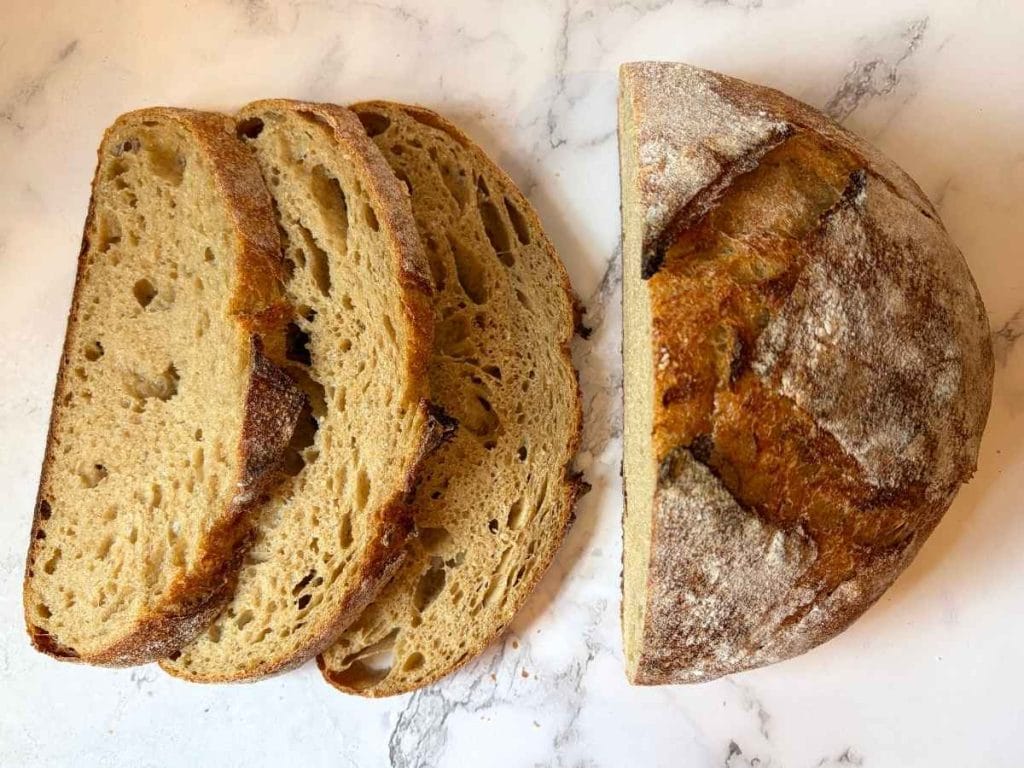
If you thought whole wheat sourdough bread with fresh milled flour wasn’t possible, think again! This recipe is my go-to for a loaf that feels wholesome and actually tastes amazing. It’s not fussy, it’s forgiving (mostly), and once you nail it, you’ll feel like you’ve unlocked a new level of sourdough baking.
Looking for more fresh milled flour sourdough recipes? Our Sourdough Bagels and Sourdough Buttermilk Biscuits are always a win in our house. Or impress your family with Sourdough Stick Pecan Buns, Sourdough Carrot Cake Focaccia, Sourdough Country Loaf, Sourdough French Bread, or Sourdough English Muffins.
New to baking with freshly milled flour? Take a walk through our Beginner’s Guide or our Grain Guide.
This post contains affiliate links. As an Amazon associate or other affiliate, I earn from qualifying purchases. We try to recommend products we personally use or have used and trust. If you choose to purchase through our links in this post, we may receive a commission, at no extra cost to you. Read the full disclosure here.
Why You’ll Love Fresh Milled Whole Grain Sourdough Bread
I’ll be honest, 100% whole wheat sourdough has a bit of a reputation for being dense and heavy, and it was a bit of a journey getting here. It’s usually known as “healthy,” but not exactly for being soft and fluffy. But here’s the good news: this fresh milled flour sourdough recipe flips the table on that!
The flavor is rich, slightly nutty, and way more complex because you’re using the entire grain—bran, germ, and all the good stuff that usually gets stripped away in store-bought bread or commercial flour.
- More nutrition in every bite thanks to freshly milled whole grains
- Softer crumb than expected (yes, it is 100% whole wheat!)
- Start it before bed and bake in the morning
- That “I made this from scratch” satisfaction is hard to beat
Whole Wheat Sourdough Bread Recipe
Tools
- Grain Mill
- Stand Mixer with Dough Hook Attachment
- Kitchen Scale
- Bench Scraper
- Banneton or Bowl
- Clean Kitchen Towel
- Parchment Paper or Silicone Baking Mat
- Dutch Oven
- Bread Lame
- Kitchen Thermometer
- Cooling Wire Rack
Ingredients
- 440g Water, cool
- 540g Hard White Wheat Berries
- 40g Sourdough Starter, active
- 10g Salt
Notes:
- I usually start the dough around 9pm before I go to bed
- Using a small amount of starter helps slow the fermentation process in fresh milled sourdough
- I find that placing my shaped doughs in the fridge for an extended time makes my loaves flatter because of the faster fermentation that can happen with fresh milled whole grains
- I prefer using a Dutch oven for sourdough bread baking
- I usually double this recipe and make two (one to eat and one to freeze)
- When placing my dough in the freezer to chill, I place the banneton in a plastic grocery bag and tie it shut.
Step-by-Step Fresh Milled Sourdough Bread
Autolyse: In bowl of mixer, mix fresh milled flour and water into a shaggy dough until no dry bits remain. Cover, and let it rest for 30–60 minutes. This helps soften the bran and improves dough structure, so don’t skip it.
Add Starter & Salt: Add your sourdough starter and salt to the dough and knead for 5-10 minutes, or until the dough reaches (or nearly) windowpane.
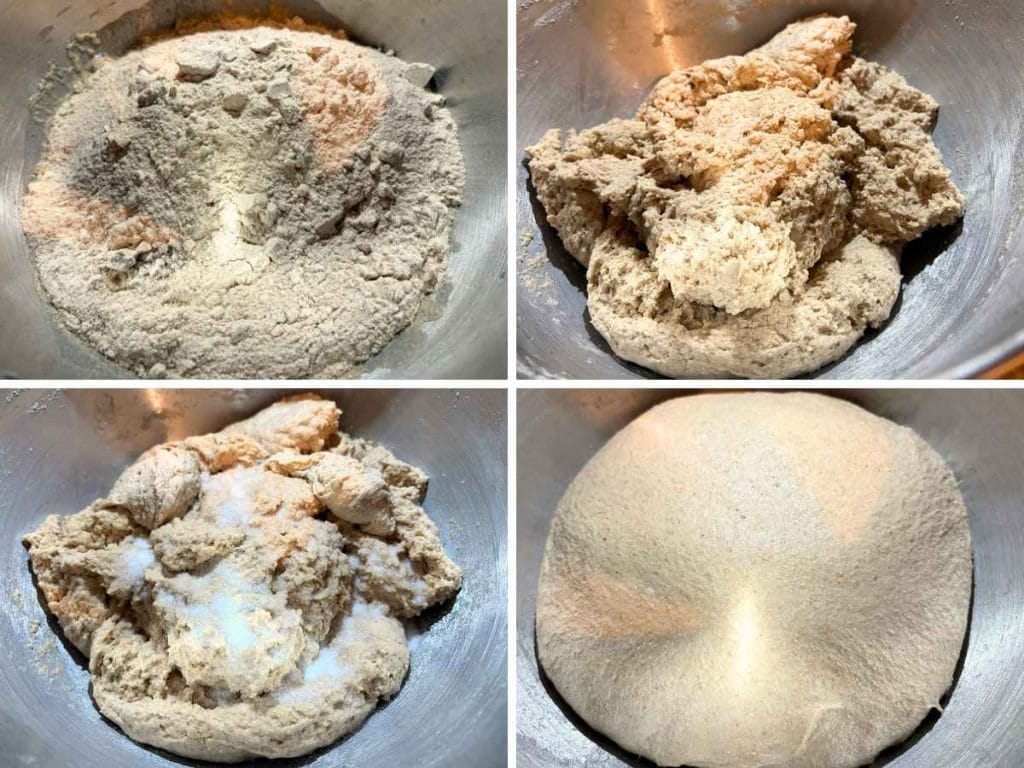
Coil Folds: Perform 2 sets of coil folds right after kneading, no need to wait to do this. I just do them right after each other to help situate the dough.
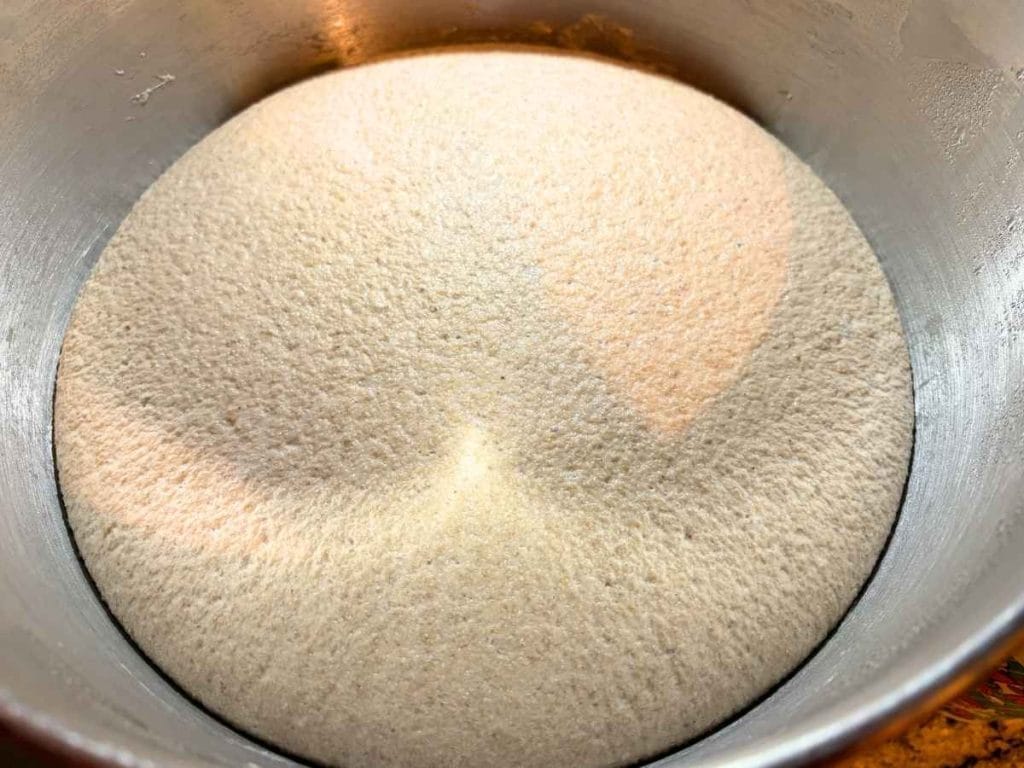
Bulk Fermentation: Cover and let the dough rise at room temperature overnight, about 8-10 hours (depending on your home temperature). If your home is warm, you may find you can make this dough during the day with a shorter bulk fermentation time.
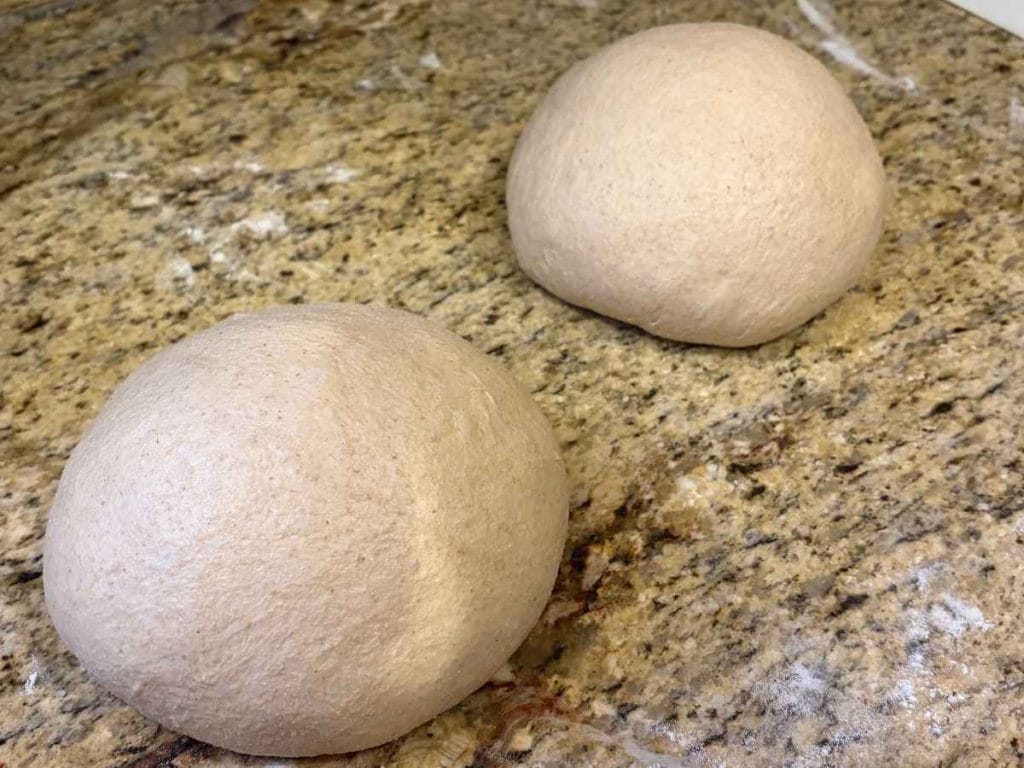
Shape the Dough: Turn the dough onto a lightly floured surface and laminate the dough. This just means gently stretching it into a large square, then folding over the sides before pre-shaping it into your round. This helps create some of those holes we love! Cover with a damp tea towel for 15–20 minutes, then do a final shape.
Final Proof: Place the shaped dough into a floured banneton or bowl. Cover and let rise 1-2 hours then place in freezer (still covered) for 45-60 minutes to chill. *When placing my dough in the freezer to chill, I place the banneton in a plastic grocery bag and tie it shut.
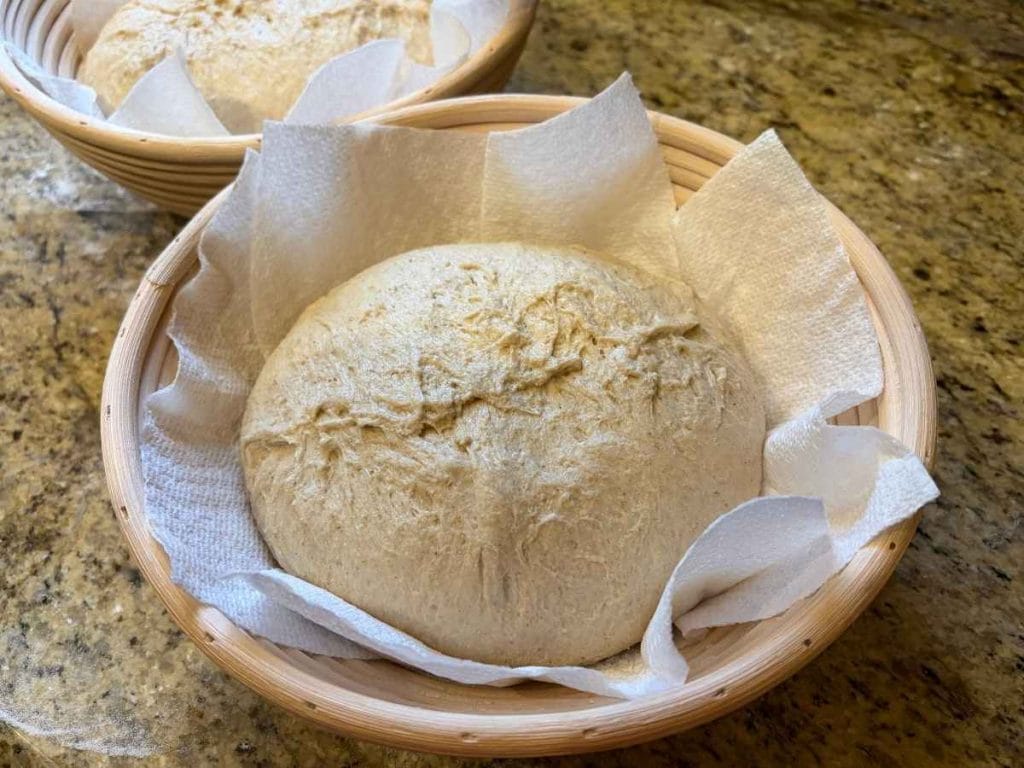
Preheat Dutch Oven: While the dough is in the freezer, preheat your oven, with the Dutch oven inside, to 500°F for 30 minutes.
Bake: Place chilled dough on lightly floured silicone baking mat or parchment paper. Carefully place in preheated Dutch oven (with lid on) and immediately lower the oven temp to 450°F. Bake 6 minutes, then score the bread. This delayed scoring helps prevent a flat loaf! Re-cover and continue baking another 30-35 minutes.
Uncover, and bake an additional 5-10 minutes to brown if needed. Sourdough bread is done when the internal temperature reaches 210°F.
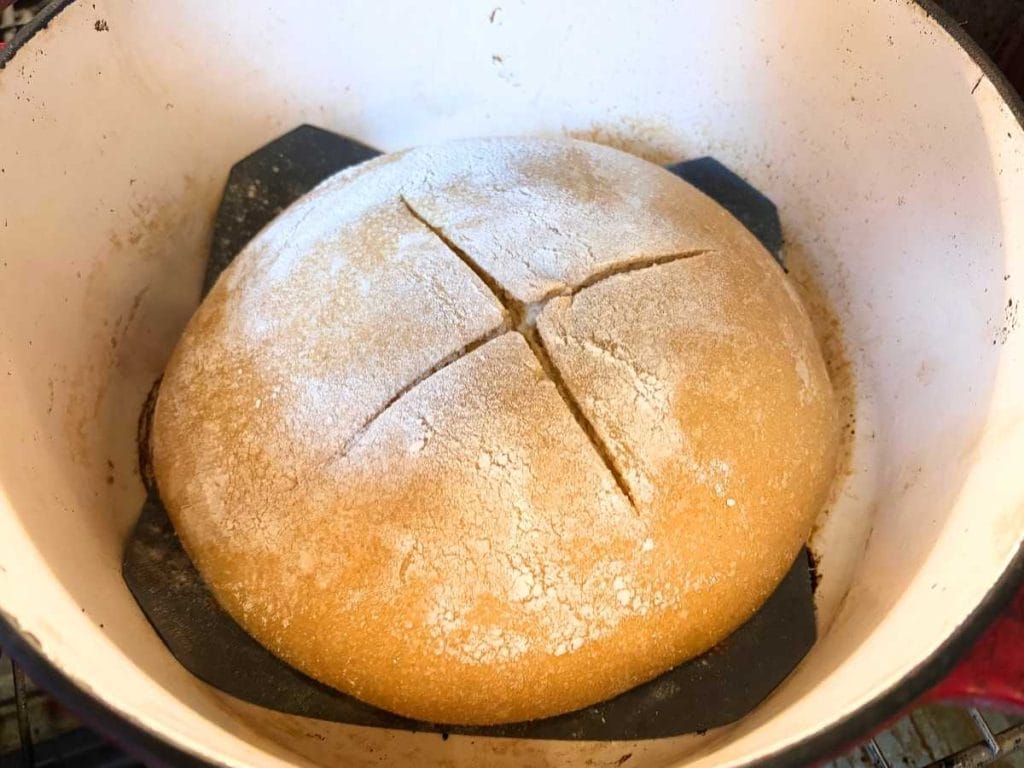
Cool: Remove the loaf from the Dutch oven and place it on a cooling rack. Let it cool completely before slicing. The wait is the hardest part.
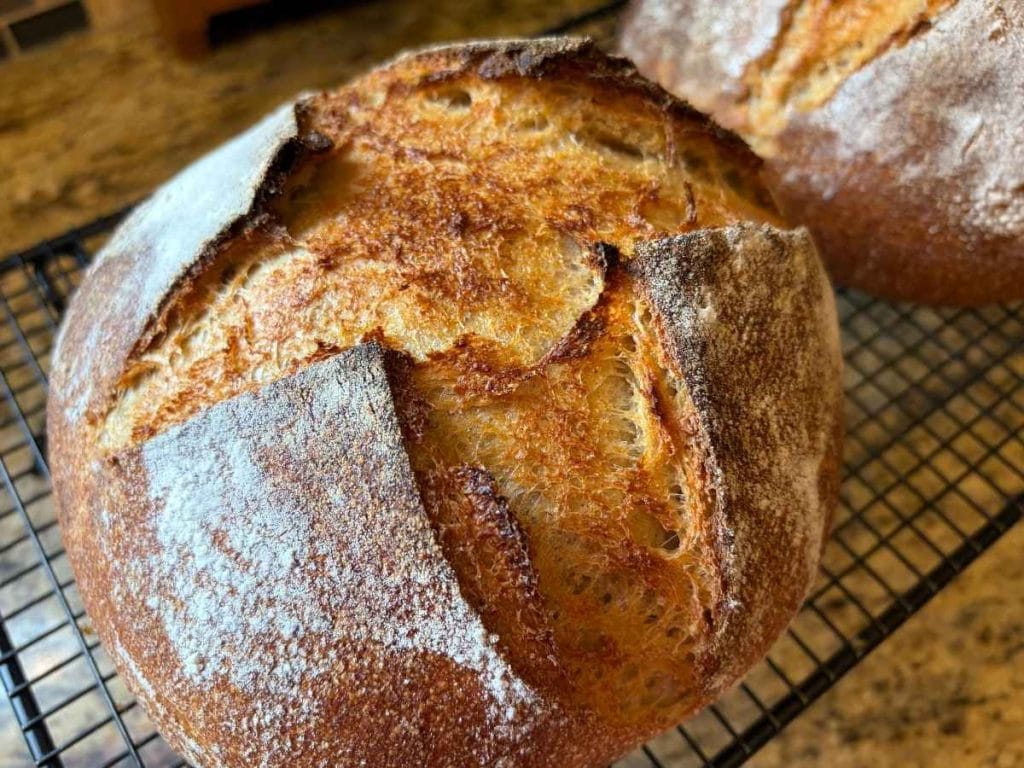
If you’ve been hesitant about baking 100% whole wheat sourdough bread with fresh milled flour, this is your sign to try it again. Yes, it’s a little different. Yes, it might take a loaf or two to really dial in. But once you get it? You’ll have a sourdough bread that is hearty, nourishing, and delicious.
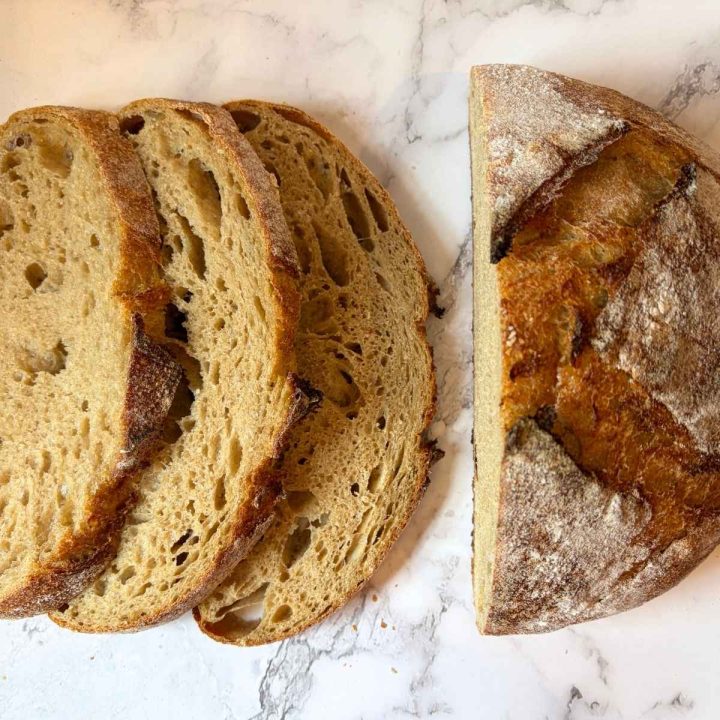
Simple Whole Wheat Sourdough Bread with Fresh Milled Flour
Learn how to make 100% whole wheat sourdough bread with fresh milled flour. This loaf has a soft crumb, rich flavor, and delicious results.
Ingredients
- 440g Water, cool
- 540g Hard White Wheat Berries
- 40g Sourdough Starter, active
- 10g Salt
Instructions
- Autolyse: In bowl of mixer, mix fresh milled flour and water into a shaggy dough until no dry bits remain. Let it rest for 30–60 minutes. This helps soften the bran and improves dough structure, so don't skip it.
- Add Starter & Salt: Add your sourdough starter and salt to the dough and knead 5-10 minutes until the dough reaches (or nearly) windowpane.
- Coil Folds: Perform 2 sets of coil folds right after kneading, no need to wait to do this. I just do them right after each other to help situate the dough.
- Bulk Fermentation: Cover and let the dough rise at room temperature overnight, about 8-10 hours (depending on your home temperature). If your home is warm, you may find you can make this dough during the day with a shorter bulk fermentation time.
- Shape the Dough: Turn the dough onto a lightly floured surface and laminate the dough. This just means gently stretching it into a large square, then folding over the sides before pre-shaping it into your round. This helps create some of those holes we love! Cover with a damp tea towel for 15–20 minutes, then do a final shape.
- Final Proof and Chill: Place the shaped dough into a floured banneton or bowl. Cover and let rise 1-2 hours, then place in freezer (still covered) for 45-60 minutes to chill.
- Preheat Dutch Oven: While the dough is in the freezer, preheat your oven, with the Dutch oven inside, to 500°F for 30 minutes.
- Bake: Place chilled dough on a lightly floured silicone baking mat or parchment paper. Carefully place in preheated Dutch oven (with lid on) and immediately lower the oven temp to 450°F. Bake 6 minutes, then score the bread. Re-cover and continue baking another 30-35 minutes. Uncover and bake an additional 5-10 minutes to brown if needed. Sourdough bread is done when the internal temperature reaches 210°F.
- Cool: Remove the loaf from the Dutch oven and place it on a cooling rack. Let it cool completely before slicing.
Notes
- I usually start the dough around 9pm before I go to bed
- Using a small amount of starter helps slow the fermentation process
- I find that placing my shaped doughs in the fridge for an extended time makes my loaves flatter because of the faster fermentation that can happen with fresh milled whole grains
- I prefer using a Dutch oven for sourdough bread baking
- I usually double this recipe and make two (one to eat and one to freeze)
- When placing my dough in the freezer to chill, I place the banneton in a plastic grocery bag and tie it shut.
Nutrition Information
Yield 12 Serving Size 1 sliceAmount Per Serving Calories 150Total Fat 1gSaturated Fat 0gUnsaturated Fat 0gSodium 330mgCarbohydrates 30gFiber 5gSugar 0gProtein 6g
*This has not been evaluated by the FDA. Nutrition Label may not be accurate. This label has been automatically pulled, and ingredients may not be categorized correctly.
FAQS
Yes! It requires higher hydration and careful fermentation, but it absolutely works—and tastes incredible.
This can be due to low hydration, under-fermentation, over-fermentation, or not enough gluten development.
Fresh milled flour offers more flavor and nutrients because it retains the full grain, including bran and germ.
No need for this recipe.
Look for at least a 50% rise, slight jiggle, and bubbles—it may not necessarily double.
Yes! Once fully cooled, wrap and place either the entire loaf or slices in a freezer bag for 1-2 months. Thaw on the counter when ready to eat.



I am an avid sourdough baker but new to fresh milled flour sourdough. I like the schedule of this bread, but was wondering….could the final proof be done in the refrigerator to slow down the process? I usually cannot bake bread until the weekend, however your recipe allows for an evening start, but then the next morning I have to go to work. Could I shape and then refrigerate to bake after I return from work?
I haven’t tried that yet, but I think it would work! Let me know how it goes if you give it a try.
I was a little worried about using fresh milled flour for sourdough, but it came out so good. It’s got a really deep, nutty flavor that you just don’t get with the store-bought stuff.
I am curious about putting in the freezer for the last part. Does dropping the temperature that much help it rise? I haven’t seen that method before.
Hey there! I like to do this for a couple reasons. It helps firm up the dough to maintain its shape, and it seems to help my loaves get a boost in oven spring. The colder dough gives the loaf a chance to expand before the crust hardens.
I’m new to sourdough and fresh milled flour. My mom gave me a bunch of hard red berries. Could I use that for this recipe? I’ve noticed most prefer hard white but I don’t have that on hand.
I think it would work just fine, you may need to just watch your fermentation time(s). Let me know how it goes!
Hi Ashleigh! Is there a percentage rise that you typically have with the dough overnight?
It’s usually about 50-70% but I don’t worry too much about hitting a certain mark.
Im a new to FMF baking, I had been baking with sourdough and store bought flour for years now, and it felt like I was finally getting the hand of it until I made the switch to FMF. But with this recipe and schedule my first loaf turn out amazing I’m sure the more I make it the better it’ll keep getting. Thank you so much for all the tips and sharing this recipe.
So glad this worked well for you!
When you make this recipe, do you mull the berries immediately before use so they are warm and speed up BF, or do you mill ahead of time so they are room temp?
I usually just mill right beforehand (my flour doesn’t get extremely hot), but you could mill a bit before to let it fully cool.
Can’t wait to try. I’ve been making sourdough for a while with commercial flour but now milling my own. Have yet to try sourdough with FMF. You don’t mention, is your start made with FMF as well? I have a mature starter and heard I need feed, gradually, a mix of FMF to not kill it
Hey there! Yes, my starter is fed with fresh milled hard white, and I tend to keep it a pretty thick starter, not runny. You could just gradually start with 1/4 FMF and build up to fully feeding it over a week or two!
WHat portions do you use to feed your starter? I’m guessing you don’t do a 100% hydration?
I keep a thicker starter (and I don’t measure, just eyeball), but I probably do 1 part starter to 3 parts flour and 1-2 parts water. It’s definitely almost a doughy consistency when I mix it up, not runny.
do you use a fed starter or cold starter from frig?
I usually use an active, fed starter. You could use cold starter if it’s very strong, but it may take longer for rising.