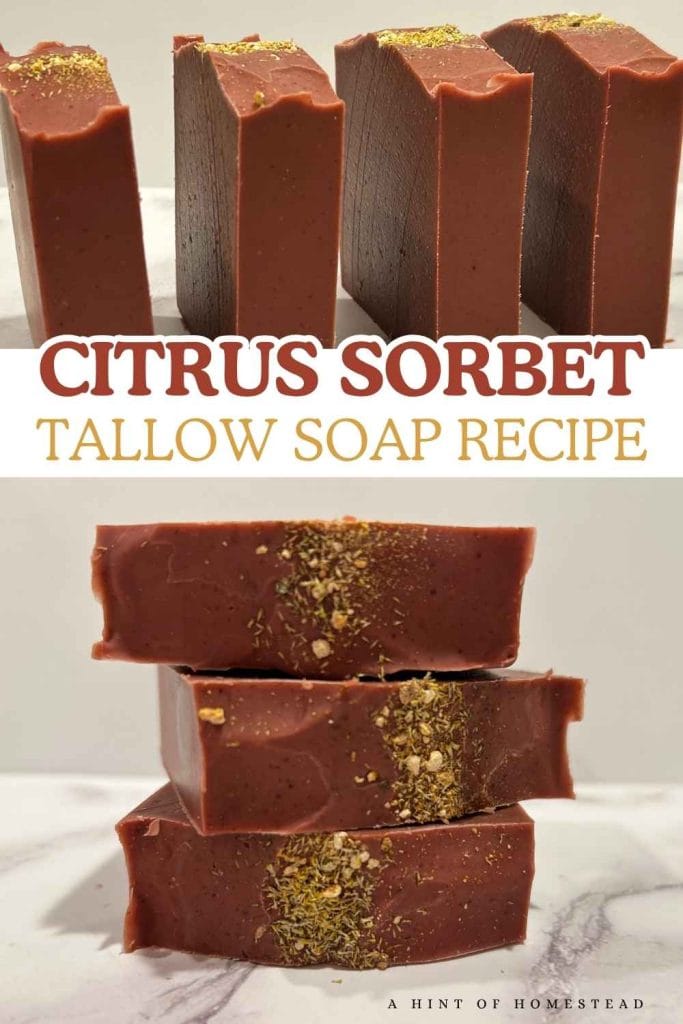
How to Make Citrus Sorbet Tallow Soap (Cold Process Soap)
Love a bright and lively bar of soap? This Citrus Sorbet Tallow Soap is fruity and fresh and instantly makes everything feel a little brighter. Maybe it’s the cheerful scent of fresh oranges or the zing of grapefruit that reminds us of sunny afternoons. Either way, combining those fresh citrus notes with creamy tallow creates a bar of soap that feels just as luxurious as it smells.
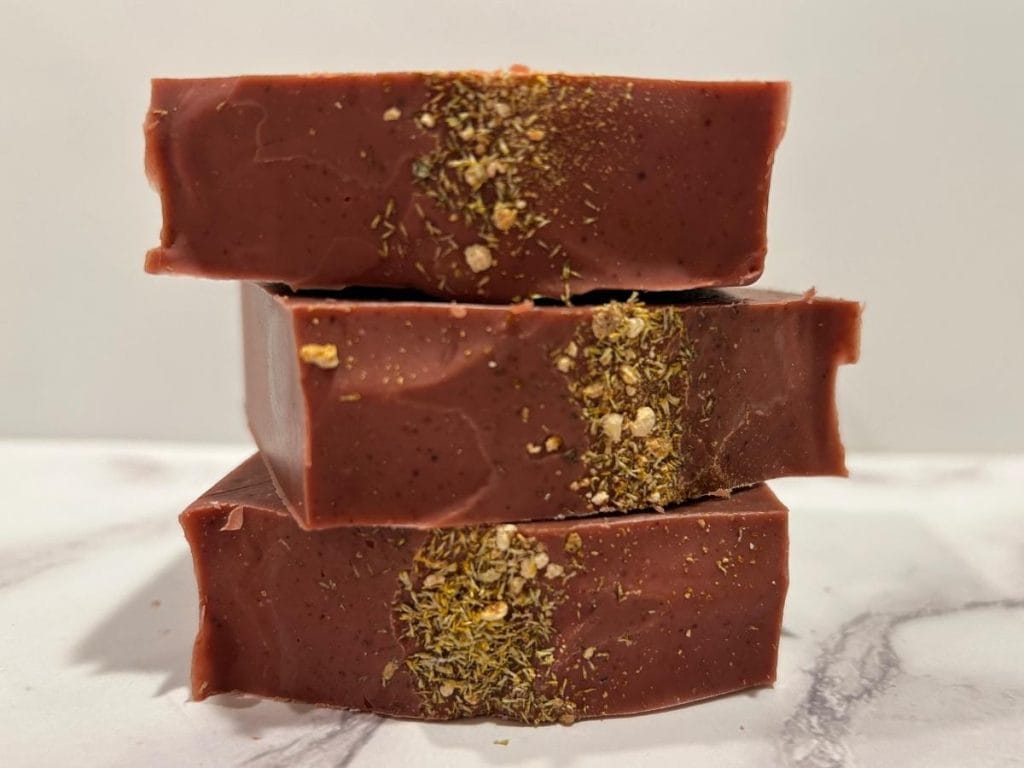
If you’ve been looking for a cold process soap recipe that’s both beautiful and practical, you’re in the right place. This citrus sorbet tallow soap has a creamy, stable lather, excellent hardness, and a refreshing scent that makes every hand wash feel like a tiny moment of summer.
Follow along to learn how to make Citrus Sorbet Tallow Soap using the Cold-Process method below.
Looking for more tallow soap tutorials? We’ve got you covered with some of our favorites like Chamomile Lavender Tallow Soap, 3-Sugar Tallow Soap, Coffee Scrub Soap, Charcoal & Tea Tree Tallow Soap, Rosemary Mint Tallow Soap, Eucalyptus Mint Soap, Pine Camo Tallow Soap, or Spice Honey Vanilla Soap.
Check out our How to Render Tallow Tutorial or our How to Make Tallow Soap Tutorial for the basics of soap making.
You may also like our how-tos on making Tallow Laundry Soap, Solid Dish Soap with Tallow, Tallow Shampoo Bars, or Tallow Balms.
This post contains affiliate links. As an Amazon associate or other affiliate, I earn from qualifying purchases. We try to recommend products we personally use or have used and trust. If you choose to purchase through our links in this post, we may receive a commission, at no extra cost to you. Read the full disclosure here.
**We are not medical professionals, and nothing on this site should be taken as medical advice; it is provided for informational purposes only. ** Always check with your doctor first.
Why You’ll Love This Citrus Sorbet Tallow Soap
- Creamy, luxurious lather thanks to nourishing tallow.
- Hard, long-lasting bars that cure beautifully.
- Fresh citrus fragrance that’s clean without being overpowering.
- Great for gift giving, craft fairs, or everyday use.
- Bright natural coloring from rhubarb and red clay.
- Bonus: You can always your homegrown luffa, sliced and then soap poured over the top into round molds for a really scrubby soap
Citrus Sorbet Tallow Soap (Cold Process) Tutorial
Supplies
- Small Crockpot
- Stainless Steel Bowls
- Silicone Spatula
- Kitchen Scale
- Cheesecloth
- Mesh Sieve
- Soap Molds and Cutter
- Immersion Blender (stick blender)
- Infrared Thermometer
- Cookie Sheet
- Plastic Wrap
- Protective Glasses and Gloves
Ingredients
- 24 oz Tallow (rendered)
- 8 oz Coconut Oil
- 8 oz Olive Oil
- 1 Tbsp Orange Peel
- 2 Tbsp Chamomile Flowers
- 1 Tbsp Himalayan Rhubarb Powder
- 5.67 oz Lye (Sodium Hydroxide)
- 12 oz Water
- 2 tsp Red Moroccan Clay
- .375 oz Blood Orange Essential Oil
- .25 oz Pink Grapefruit Essential Oil
- .25 oz Coriander Essential Oil
- .1875 Lemongrass Essential Oil
- .1875 Atlas Cedarwood Essential Oil
Notes:
- This recipe makes approximately 10-12 bars depending on cut size
- Make sure you melt fat on low heat, you do not want to scorch it by using higher temperatures.
- Do not use any melt-and-pour soaps (pre-bought soap ingredients often in craft stores) in this process.
- Trace is when the soap mixture has emulsified to the stage of looking like pudding. Let some of the soap drop off the blender or a spatula, and you should be able to see it kind of sitting on top of the rest of the mixture.
- Cure soap in a dark, dry area
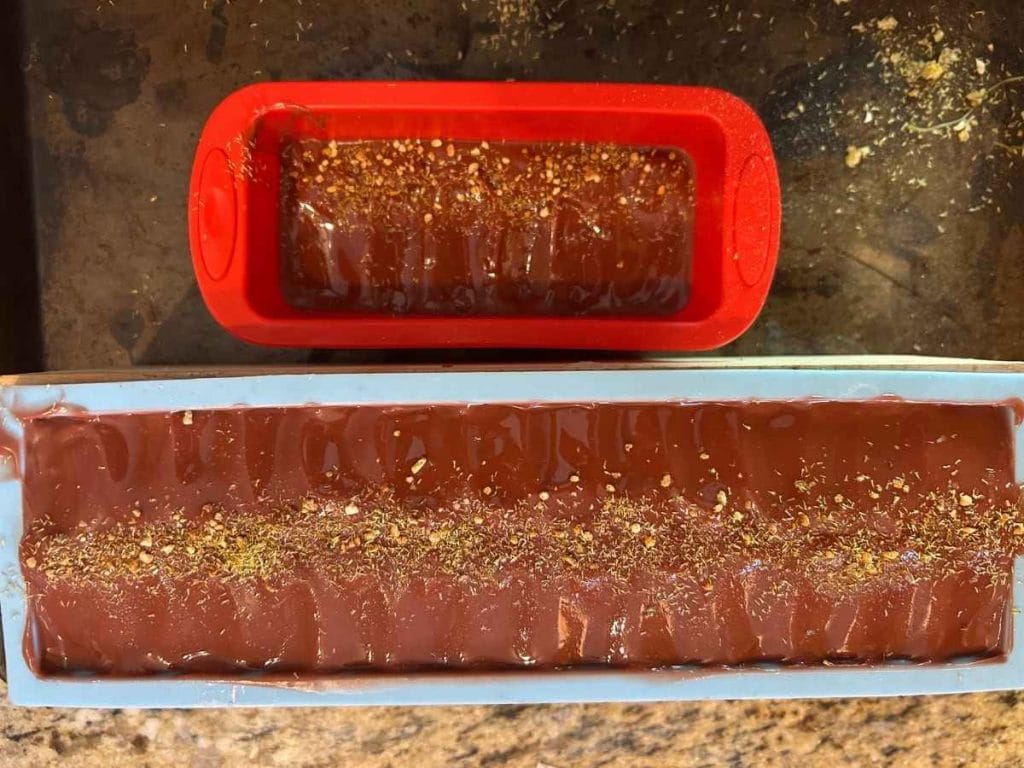
- I usually fill one soap loaf mold and then have a little extra I put into a small silicone mold.
- Topping with orange peel and dried chamomile flowers is optional
- You can also infuse your olive oil with the rhubarb powder a couple of weeks before making your soap
- Colors may vary! PH levels can vary and change the outcome of the colors in this soap
Before You Begin Making Citrus Sorbet Tallow Soap
**SAFETY FIRST when working with lye. Have vinegar nearby in case of spills. Cold process soap is made using sodium hydroxide, which requires proper safety precautions.
Always:
- Wear eye protection and gloves. Long sleeves, pants, and shoes are great too.
- Work in a well-ventilated area.
- Pour lye into water. NEVER pour water into the lye. A hard pocket of undissolved crystals can occur, and you could end up with undissolved lye in your soap, or lye could explode out of your bowl. Be safe!
- Keep children and pets away from your workspace.
- Accurately weigh every ingredient. Run a soap recipe (even mine) through a lye calculator — I use SoapCalc.net. Soap making is basically kitchen chemistry. Use a digital scale and always measure in grams or ounces, never cups.
Natural Red Colorant
- This comes from a combination of Himalayan Rhubarb and Red Moroccan Clay. Tallow is infused with the rhubarb, and then the red clay is added after the lye is mixed with the oils to make this deep red. If you substitute with other botanicals or mica powders, the color may be different.
Citrus Sorbet Tallow Soap Tutorial
Prepping Soap
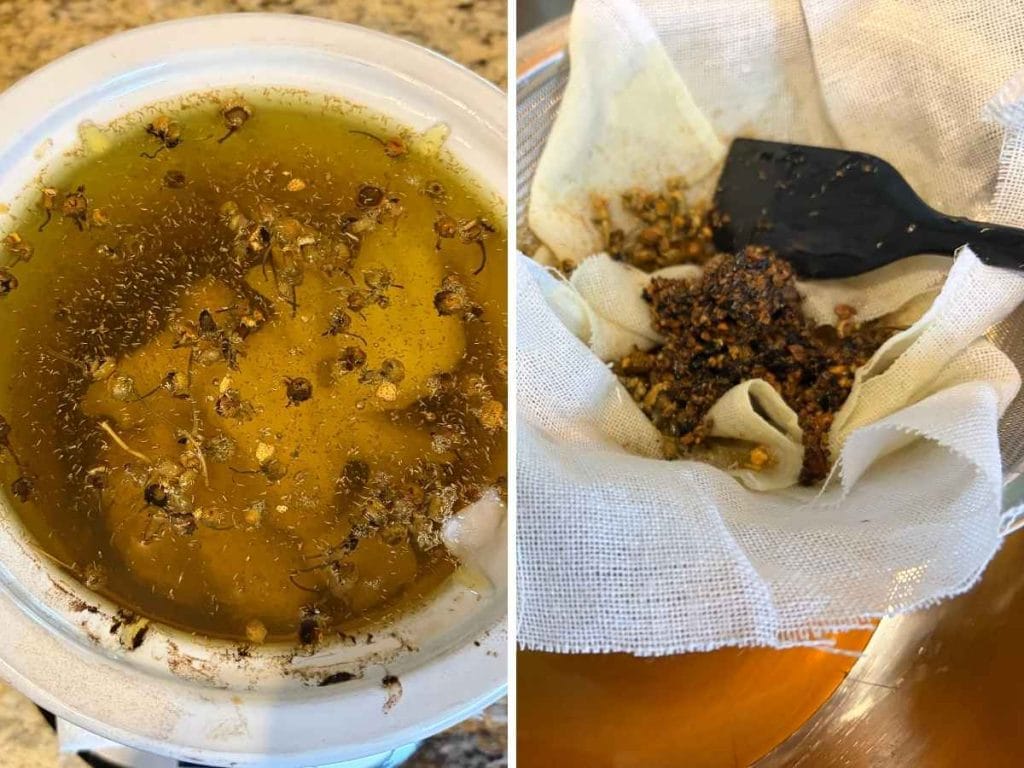
Infuse Tallow: Weigh and infuse tallow with chamomile flowers, orange peel, and Himalayan rhubarb in a small crockpot on the warm setting for 24-48 hours before making soap. You can also include more of your favorite homegrown herbs if you’d like.

Melt Fats and Oils Together: When I begin getting ready to make soap, I will measure and add my olive oil and coconut oil to the same crockpot with the infusing tallow in order to get them all to the same temperature. This is usually somewhere between 130-165 degrees.
Prepare Your Work Area and Supplies: Wear gloves and goggles, and work in a well-ventilated area.
Making Citrus Sorbet Tallow Soap
Make the Lye Solution: Put on protective gear before starting this step and make sure you are in a well-ventilated area or outside. Weigh water in a heat-resistant bowl and lye crystals in another bowl. Slowly add sodium hydroxide (lye) to the water (never the other way around!). Stir until fully dissolved and allow the lye solution to cool to around 100 degrees. This will take about 15-20 minutes.

Cool Oils: Strain oils using a mesh strainer and a cheesecloth into a different soap-safe bowl, and let the oils cool to around 100 degrees. This will take around 15-20 minutes. In the meantime, you can measure your essential oils in another small bowl.
Combine Lye Solution & Oils: Slowly pour the lye solution into the oils. Using an immersion blender, keep it submerged, and pulse for about 15 seconds. Then use spatula to stir the mixture, switching between pulsing and stirring until you’ve reached a light trace (a thin pudding-like consistency).
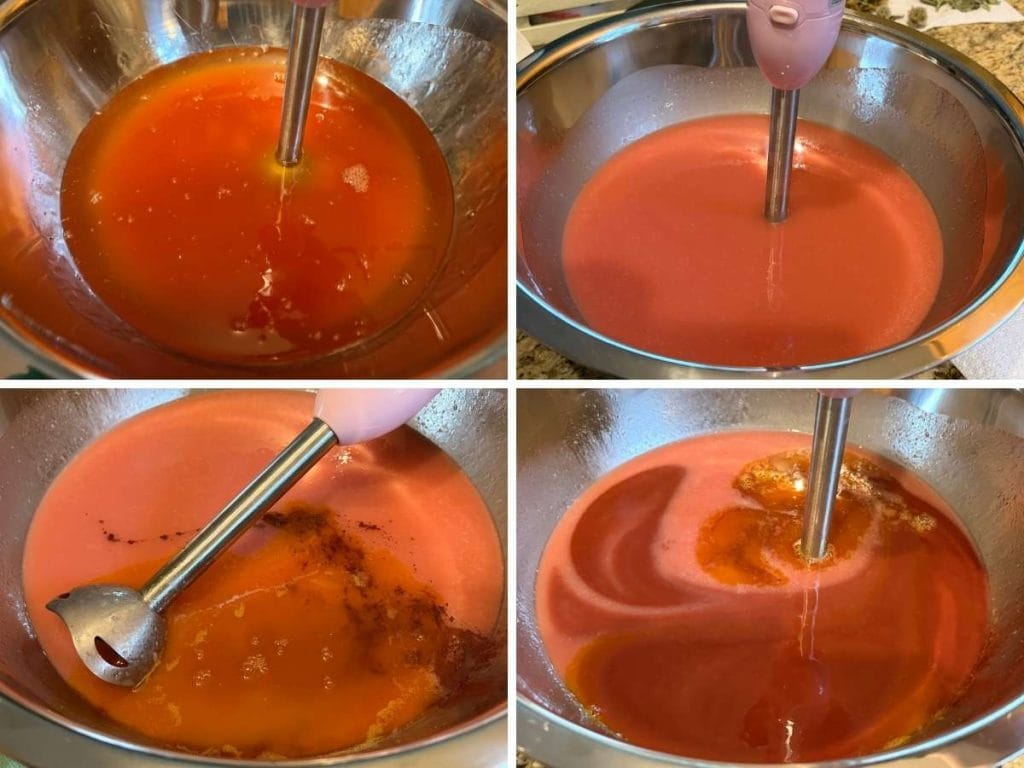
Add Powders and Scent to Soap Batter: Add in the Red Moroccan Clay powder and essential oils. Give a few pulses and stir to incorporate well. Keep at this until you have a thick pudding consistency.
Pour Soap Batter: Go slowly when pouring soap so it doesn’t splatter. Fill mold(s) and gently tap out any air bubbles. Top with dried chamomile flowers and orange peel if desired.
Curing Soap
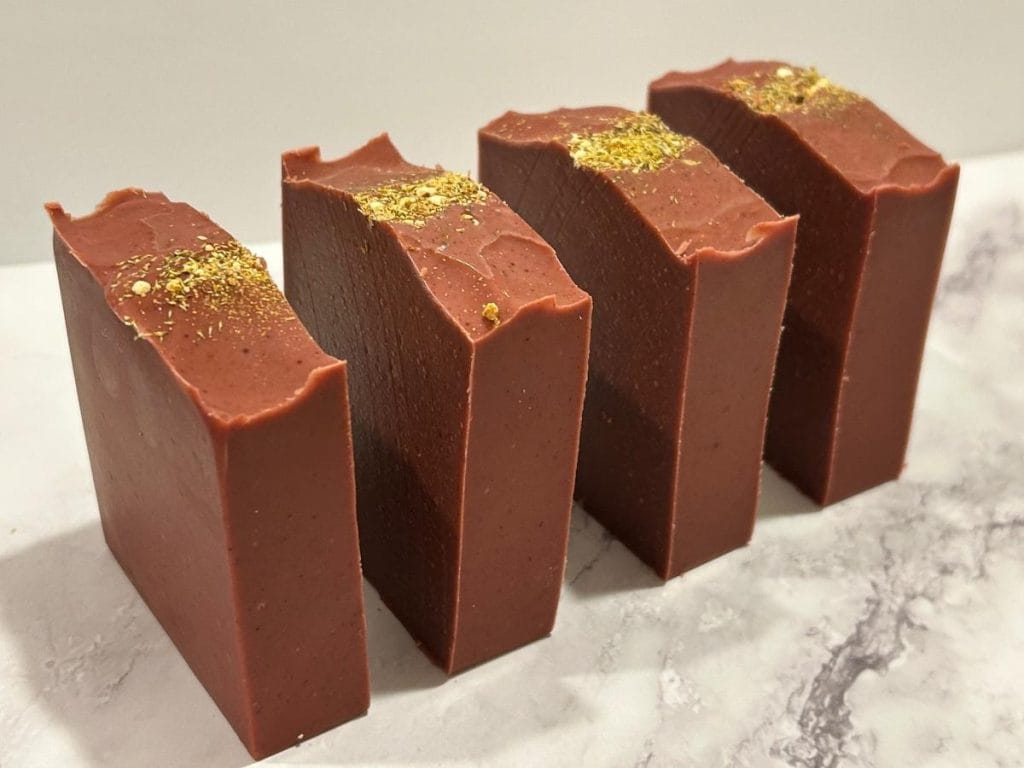
Insulate, Cut, & Cure: Put soap molds on a cookie sheet for easier transporting. Lightly cover the soap with plastic wrap (to help prevent soda ash). Allow it to fully saponify for 24-48 hours before unmolding. Cut into bars of desired size and cure for 4-6 weeks for best hardness and lather.
Common Cold Process Soap Problems
- Soda ash? It’s harmless. Soda ash is a white, ashy film that can sometimes show up on soap when you go to cut it. It happens when unsaponified lye reacts with carbon dioxide in the air. The quality of soap is not diminished, and the soap is safe to use. Spray with rubbing alcohol or embrace the rustic look.
- Soap separating? Blend a bit longer next time until you get that pudding texture.
- Seizing? Soap batter hardening up too fast? Your oils might be too hot or your scent too strong.
- Bars getting mushy? Make sure you let the bars cure for 4-6 weeks to harden and make them last longer. Be sure they dry in between uses and don’t sit in a wet puddle.
If you’re looking for a cold process soap that’s equal parts creamy, colorful, and practical, this citrus sorbet tallow soap deserves a spot on your project list. It has the rich lather that tallow soap is known for, plus a cheerful citrus scent that brightens any sink or shower.
So grab your favorite citrus oils, put on your safety gear, and enjoy the process. Before long, you’ll have a loaf of beautiful handmade soap that’s just as enjoyable to use as it was to create, and you’ll probably find yourself planning your next colorful batch before this one has even finished curing.
You’ve read about making tallow skincare on the blog, and now you can bring it home! Sometimes life gets busy, and you just don’t have the time to make it yourself. Visit our shop to buy our handcrafted tallow soaps.
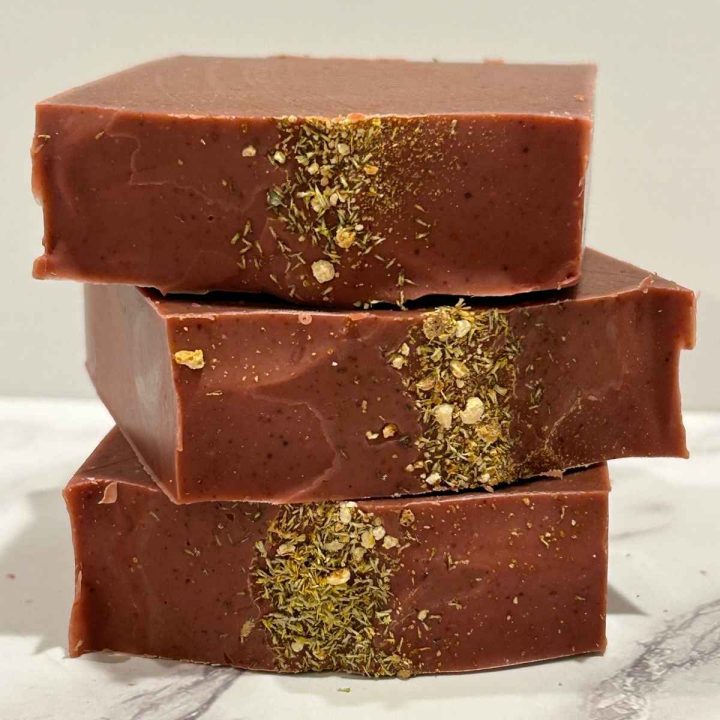
How to Make Citrus Sorbet Tallow Soap (Cold Process Soap)
Learn how to make citrus sorbet tallow soap with this easy cold process recipe. Creamy, bubbly, beginner-friendly, and naturally refreshing.
Materials
- 24 oz Tallow (rendered)
- 8 oz Coconut Oil
- 8 oz Olive Oil
- 1 Tbsp Orange Peel
- 2 Tbsp Chamomile Flowers
- 1 Tbsp Himalayan Rhubarb Powder
- 5.67 oz Lye (Sodium Hydroxide)
- 12 oz Water
- 2 tsp Red Moroccan Clay
- .375 oz Blood Orange Essential Oil
- .25 oz Pink Grapefruit Essential Oil
- .25 oz Coriander Essential Oil
- .1875 oz Lemongrass Essential Oil
- .1875 oz Atlas Cedarwood Essential Oil
Tools
- Small Crockpot
- Stainless Steel Bowls
- Silicone Spatula
- Kitchen Scale
- Cheesecloth
- Mesh Sieve
- Soap Molds and Cutter
- Immersion Blender (stick blender)
- Infrared Thermometer
- Cookie Sheet
- Plastic Wrap
- Protective Glasses and Gloves
Instructions
- Infuse Tallow: Weigh and infuse tallow with chamomile flowers, orange peel, and Himalayan rhubarb in a small crockpot on the warm setting for 24-48 hours before making soap. You can also include more of your favorite homegrown herbs if you'd like.
- Melt Fats and Oils Together: When I begin getting ready to make soap, I will measure and add my olive oil and coconut oil to the same crockpot with the infusing tallow in order to get them all to the same temperature. This is usually somewhere between 130-165 degrees.
- Prepare Your Work Area and Supplies: Wear gloves and goggles, and work in a well-ventilated area.
- Make the Lye Solution: Put on protective gear before starting this step and make sure you are in a well-ventilated area or outside. Weigh water in a heat-resistant bowl and lye crystals in another bowl. Slowly add sodium hydroxide (lye) to the water (never the other way around!). Stir until fully dissolved and allow the lye solution to cool to around 100 degrees. This will take about 15-20 minutes.
- Cool Oils: Strain oils using a mesh strainer and a cheesecloth into a different soap-safe bowl, and let the oils cool to around 100 degrees. This will take around 15-20 minutes. In the meantime, you can measure your essential oils in another small bowl.
- Combine Lye Solution & Oils: Slowly pour the lye solution into the oils. Using an immersion blender, keep it submerged, and pulse for about 15 seconds. Then use spatula to stir the mixture, switching between pulsing and stirring until you've reached a light trace (a thin pudding-like consistency).
- Add Powders and Scent to Soap Batter: Add in the Red Moroccan Clay powder and essential oils. Give a few pulses and stir to incorporate well. Keep at this until you have a thick pudding consistency.
- Pour Soap Batter: Go slowly when pouring soap so it doesn't splatter. Fill mold(s) and gently tap out any air bubbles. Top with dried chamomile flowers and orange peel if desired.
- Insulate, Cut, & Cure: Put soap molds on a cookie sheet for easier transporting. Lightly cover the soap with plastic wrap (to help prevent soda ash). Allow it to fully saponify for 24-48 hours before unmolding. Cut into bars of desired size and cure for 4-6 weeks for best hardness and lather.
Notes
- This recipe makes approximately 10-12 bars depending on cut size
- Make sure you melt fat on low heat, you do not want to scorch it by using higher temperatures.
- Do not use any melt-and-pour soaps (pre-bought soap ingredients often in craft stores) in this process.
- Trace is when the soap mixture has emulsified to the stage of looking like pudding. Let some of the soap drop off the blender or a spatula, and you should be able to see it kind of sitting on top of the rest of the mixture.
- Cure soap in a dark, dry area
- I usually fill one soap loaf mold and then have a little extra I put into a small silicone mold.
- Topping with orange peel and dried chamomile flowers is optional
- You can also infuse your olive oil with the rhubarb powder a couple of weeks before making your soap
- Colors may vary! PH levels can vary and change the outcome of the colors in this soap
FAQS
You can substitute lard, but the texture and hardness might vary slightly and the SAP values may differ. Make sure you check with a lye calculator before swapping 1:1.
Absolutely. The tutorial is simple enough for beginners while still creating beautiful bars.
The cure time allows excess water to evaporate—giving you a harder, longer-lasting bar of soap. We typically cure cold process soaps for at least 4–6 weeks.
Absolutely! You can choose whichever oils you prefer, just make sure to use the correct percentages for specific kinds.
Around 1 year for best scent if stored in a dry spot —though I bet it’ll be gone long before that! Really though, soap lasts indefinitely.
No. Properly rendered tallow has very little scent, and once combined with essential oils and fully cured, the finished soap smells like the scents you’ve chosen.