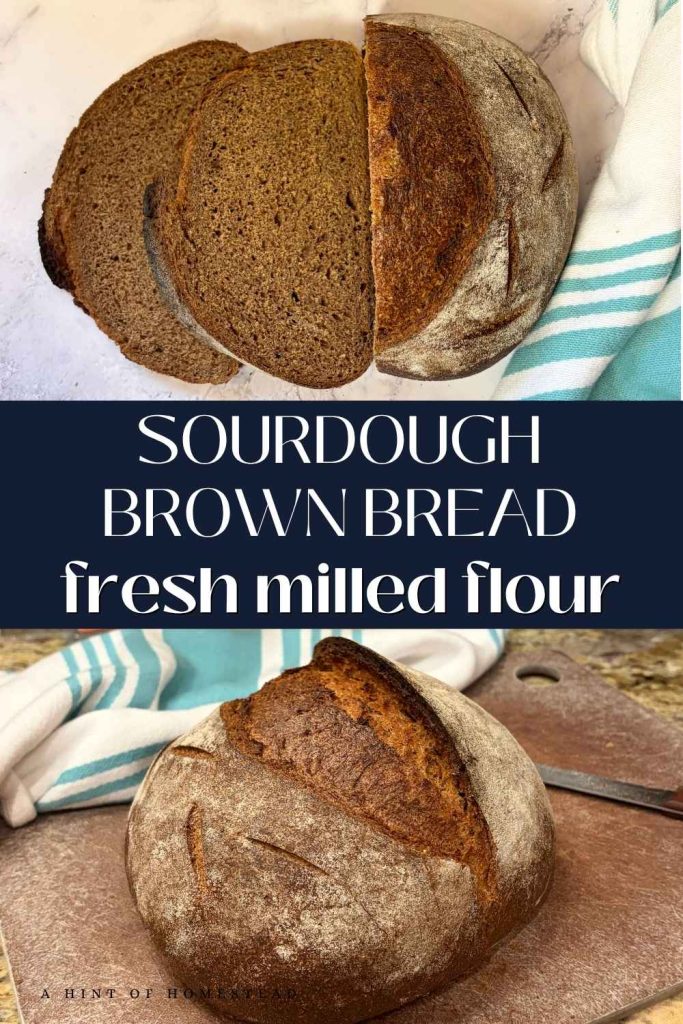
Same Day Sourdough Brown Bread with Fresh Milled Flour
This same-day sourdough brown bread combines the goodness of whole grains with the rich flavors of molasses and brown sugar, while a little cocoa powder gives the loaf its beautiful brown bread color and adds another layer of flavor. It’s hearty, slightly sweet, full of flavor, and perfect for slathering with a little butter.
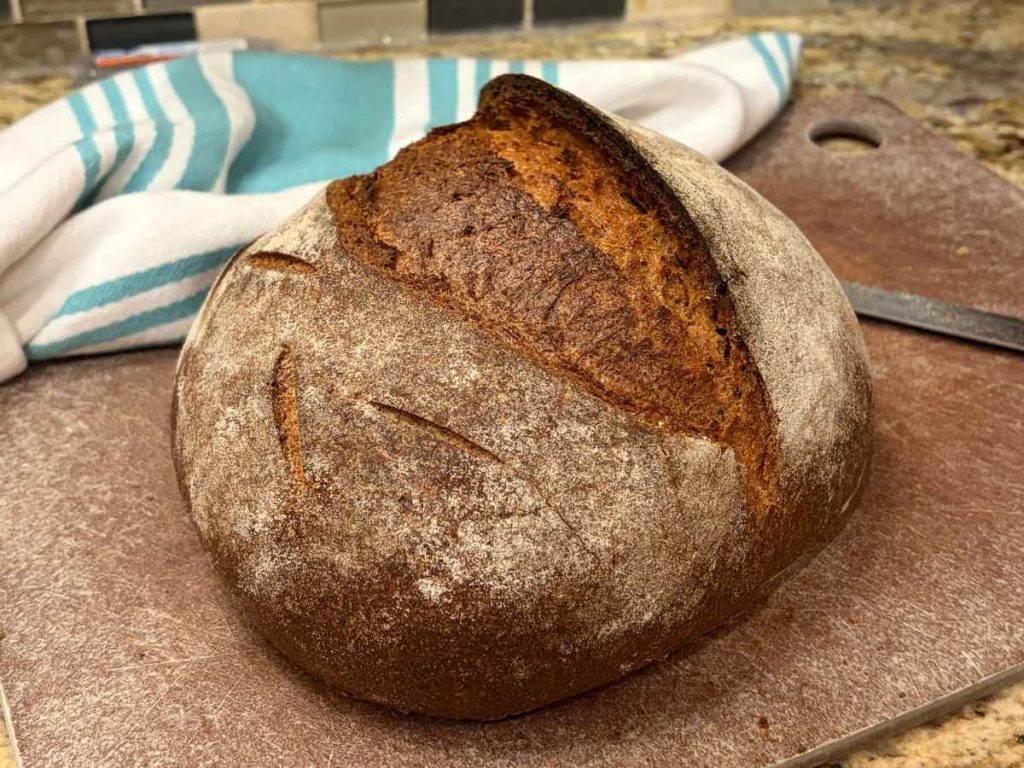
There is something about pulling a beautiful, homemade sourdough boule out of the oven, especially when you’ve milled the wheat yourself. That nutty, wholesome aroma filling the kitchen is hard to beat! And while I absolutely love a traditional sourdough loaf, sometimes I want something a little different. Like a nourishing, sourdough version of the cheesecake factory bread.
The best part? There’s no need to plan a day ahead or wait overnight for your bread. If you enjoy baking with fresh milled flour and love the idea of making a naturally leavened, slightly sweet brown bread boule, I think this one deserves a spot in your sourdough recipe collection.
Want more whole wheat sourdough recipes? Try our 100% Fresh Milled Sourdough, Sourdough Whey Loaf, Overnight Sourdough Sandwich Bread, Sourdough Pecan Sticky Buns, Sourdough Focaccia, Sourdough English Muffins, Sourdough French Bread, Sourdough Challah, Sourdough Pretzel Buns, or Sourdough Bagels.
You can also use sourdough discard in these fresh milled flour recipes: Sourdough Chocolate Chip Cookies, Sourdough Pound Cake, Sourdough Molasses Cookies, Sourdough Chocolate Crinkle Cookies, Sourdough Apple Pie Cobbler, Sourdough Granola, or Sourdough Ricotta Donuts.
New to baking with freshly milled flour? Take a walk through our Fresh Milled Flour Beginner’s Guide or our Grain Guide.
This post contains affiliate links. As an Amazon associate or other affiliate, I earn from qualifying purchases. We try to recommend products we personally use or have used and trust. If you choose to purchase through our links in this post, we may receive a commission, at no extra cost to you. Read the full disclosure here.
Why You’ll Love This Same Day Sourdough Brown Bread
There are plenty of reasons to love homemade sourdough, but this recipe has a few things that make it stand out from your everyday sourdough boule.
- Made with 100% fresh milled hard white wheat: You’re getting the whole grain goodness of freshly milled wheat without using commercially processed white flour.
- A little sweetness without being dessert bread: Molasses and brown sugar create a lovely balance of sweetness and rich, deep flavor.
- Beautiful brown bread color: Unsweetened cocoa powder helps give this loaf its dark color without turning it into a chocolate-flavored bread.
- A same-day baking option: No overnight fermentation is required for this recipe.
- Perfect for so many meals: Serve it with breakfast, alongside a bowl of homemade soup, or toasted with butter for an afternoon snack.
Fresh Milled Sourdough Brown Bread Ingredients
What makes this recipe a little different is the combination of ingredients. Instead of making a traditional sourdough boule with just flour, water, starter, and salt, we’re adding a few ingredients that create a delicious flavor profile.
Fresh Milled Hard White Wheat: Hard white wheat is a wonderful choice for homemade whole wheat sourdough. It provides the whole grain flavor and texture you’d expect from freshly milled flour while having a milder flavor than hard red wheat. Because you’re using the entire grain, freshly milled flour includes the bran and germ along with the endosperm. This gives the bread its hearty whole-grain character.
Molasses: Molasses is one of the ingredients that really makes this bread special. It contributes a rich, distinctive sweetness that pairs beautifully with whole wheat. It also helps create that familiar brown bread flavor that makes you want another slice.
Brown Sugar: Brown sugar adds another layer of sweetness and complements the deeper flavor of the molasses. Together, these ingredients give the bread a delicious balance without making it overly sweet.
Unsweetened Cocoa Powder: A little cocoa powder helps give brown bread its beautiful darker color and contributes depth to the overall flavor. It isn’t intended to make the bread taste like chocolate.
Coconut Oil: Coconut oil adds fat to the dough, a hint of flavor, and contributes to the overall texture of the finished bread.
Sourdough Brown Bread Recipe
Tools
- Grain Mill
- Stand Mixer with Dough Hook Attachment
- Kitchen Scale
- Bench Scraper
- Whisk
- Banneton or Bowl
- Clean Kitchen Towel
- Parchment Paper or Silicone Baking Mat
- Dutch Oven
- Bread Lame
- Kitchen Thermometer
- Rice Flour for dusting
- Cooling Wire Rack
Ingredients
- 320 g water
- 120 g active sourdough starter
- 60 g molasses
- 40 g brown sugar
- 500 g hard white wheat
- 30 g coconut oil, melted
- 10 g unsweetened cocoa powder
- 10 g salt
Notes
- Don’t use blackstrap molasses, it is much more bitter than regular molasses
- I recommend weighing your ingredients rather than measuring by volume, especially when working with whole grain flour. Measuring ingredients by weight gives you much more consistency from one loaf to the next. A digital kitchen scale is especially helpful when baking with fresh milled flour.
- You can swap the coconut oil for olive or avocado oil; I just prefer the flavor it brings
- I use the 7-minute score technique but you do not have to, you can score before baking
- I often start this bread at 8 am in order to have it ready for dinner
- I make this same day, but you could do an overnight bulk rise if you decrease the sourdough starter amount to around 30 grams and then add 45 grams flour and 45 grams water to the recipe
- I like same-day breads because I find that fresh milled sourdough can easily over-ferment or get really sour if you do a long cold proof
How to Make Same Day Sourdough Brown Bread
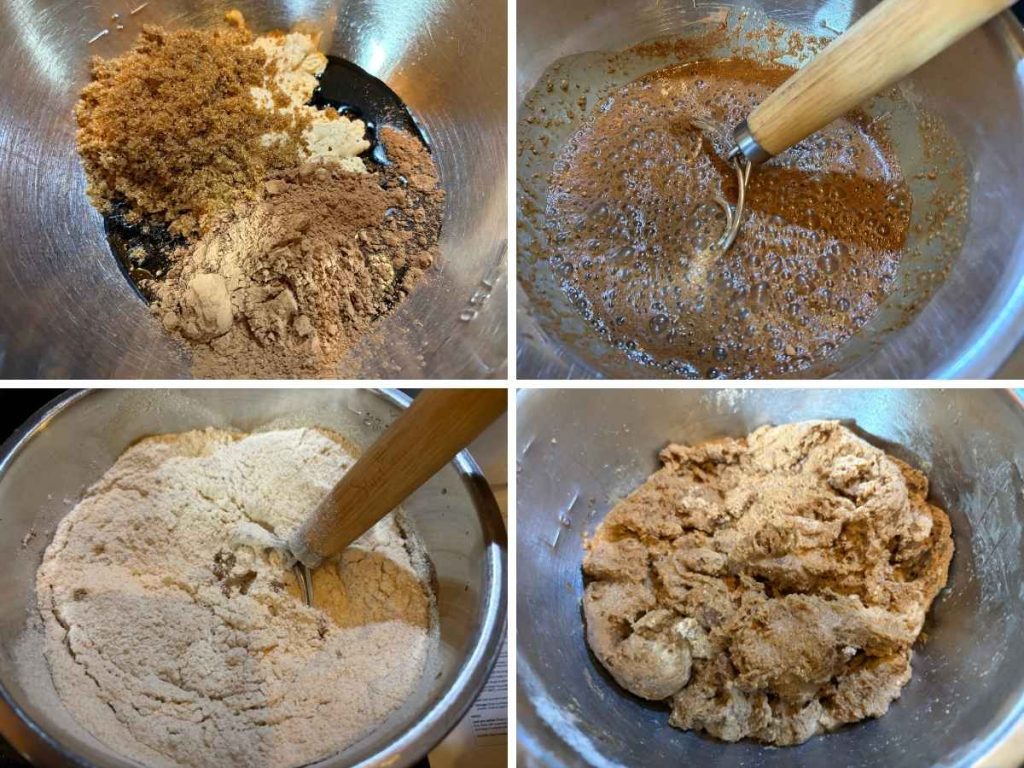
Autolyze: In bowl of stand mixer, combine starter, cocoa, molasses, brown sugar, and water. Whisk together. Add fresh milled flour and mix into a shaggy dough. Cover and rest 30 minutes.
Knead: Add melted coconut oil and salt to dough and knead for 5-10 minutes, or until windowpane is reached (or just about). Do one set of coil folds and cover.
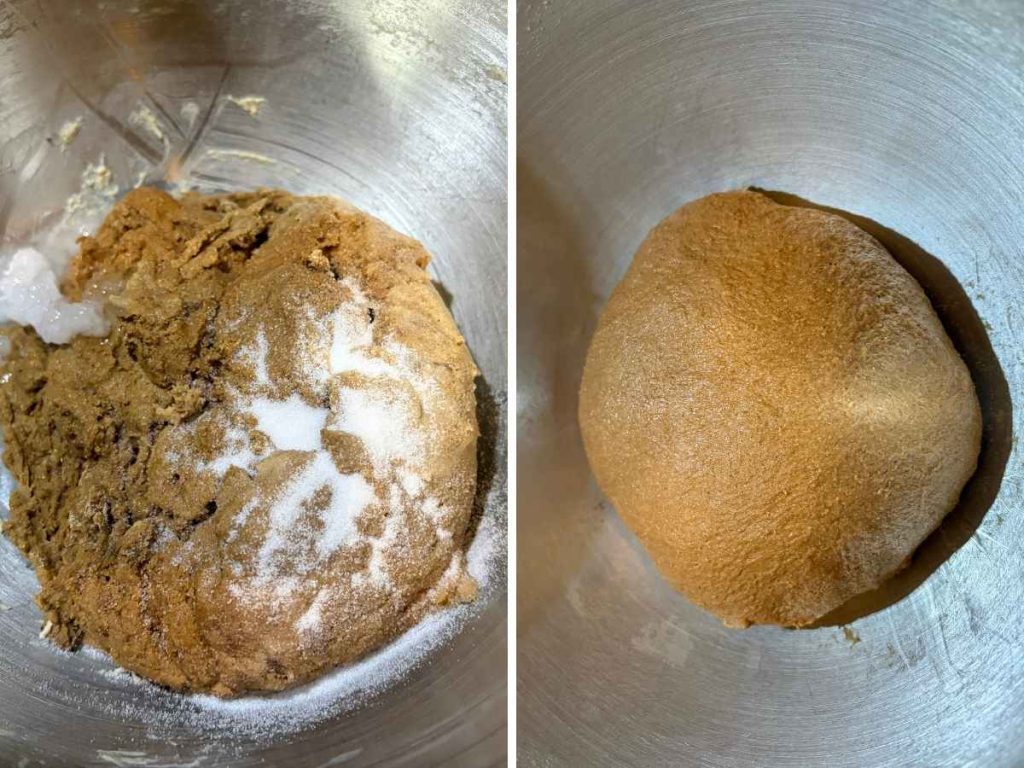
Bulk Rise: Let covered dough rise 4-6 hours or until dough has mounded and jiggles (this is about doubling). Bulk rise times will vary depending on house temperature.
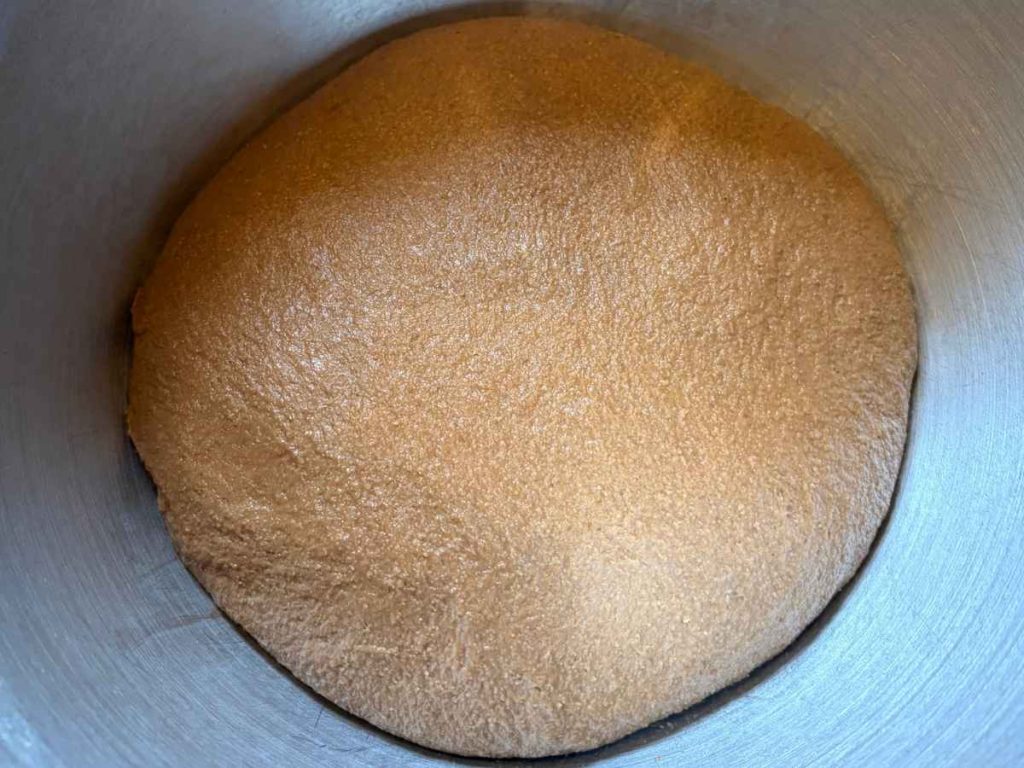
Laminate and Pre-Shape: Dump dough onto dusted surface and gently stretch into a large rectangle (try not to rip dough) then shape into boule. This process helps with tension and getting some bubbles into the dough. Cover with a damp towel and let rest 20 minutes.
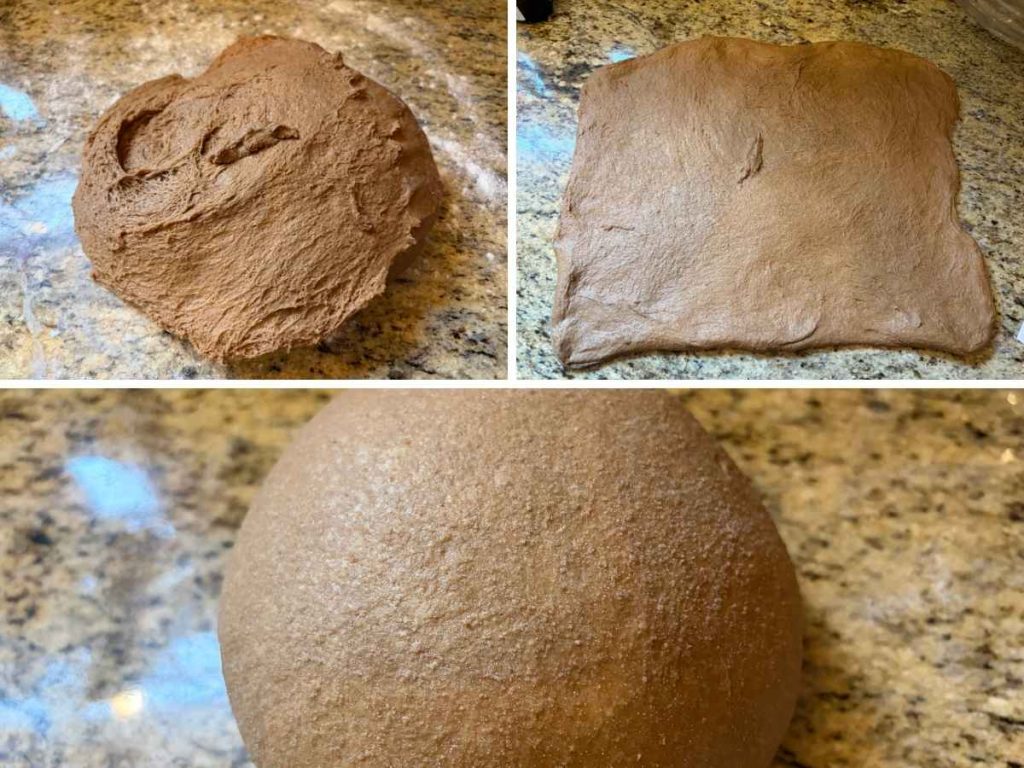
Final Shape: Perform a final shaping (be gentle) and place into a banneton or lined bowl. Cover with damp towel again and let rise for 1 hour.
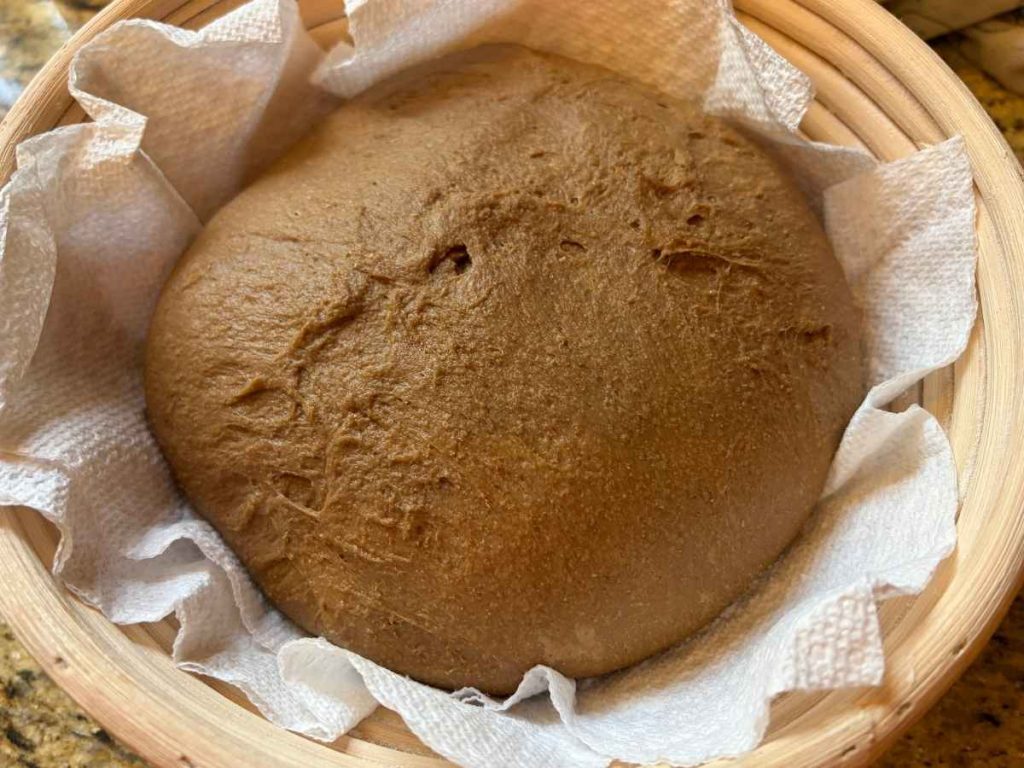
Chill Dough and Pre-heat: Place covered dough in freezer for about 30 minutes while you pre-heat oven (with the Dutch oven inside) to 500 degrees.
Load the Dough: Turn oven temperature down to 450 degrees just before baking (DON’T forget this step). Dust silicone mat or parchment paper with flour and place chilled dough on it before placing in the pre-heated Dutch oven. I usually add 2 ice cubes to Dutch oven help create more steam for rising.
Bake and 7-Minute Score: Cover and bake bread for 7 minutes. I like to wait to score bread until it has baked for 7 minutes. This is optional and you can score before baking if you prefer, but I find it very helpful for getting a good oven spring. Just be careful when scoring, as it will be extremely hot!
Continue Baking: After scoring, continue baking covered for an additional 30-35 minutes. Check your bread’s internal temperature at the 30-minute mark. It is done when it reaches about 205-210 degrees.
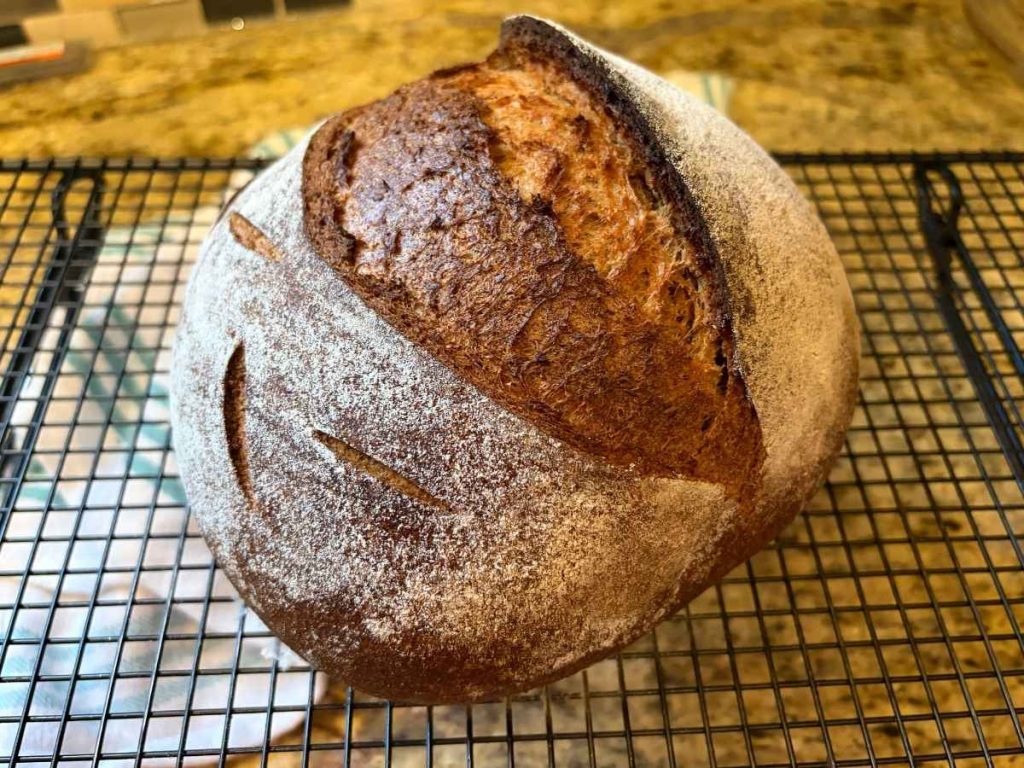
Cool: Remove from oven and place on a cooling rack. Let cool completely before cutting into your bread.
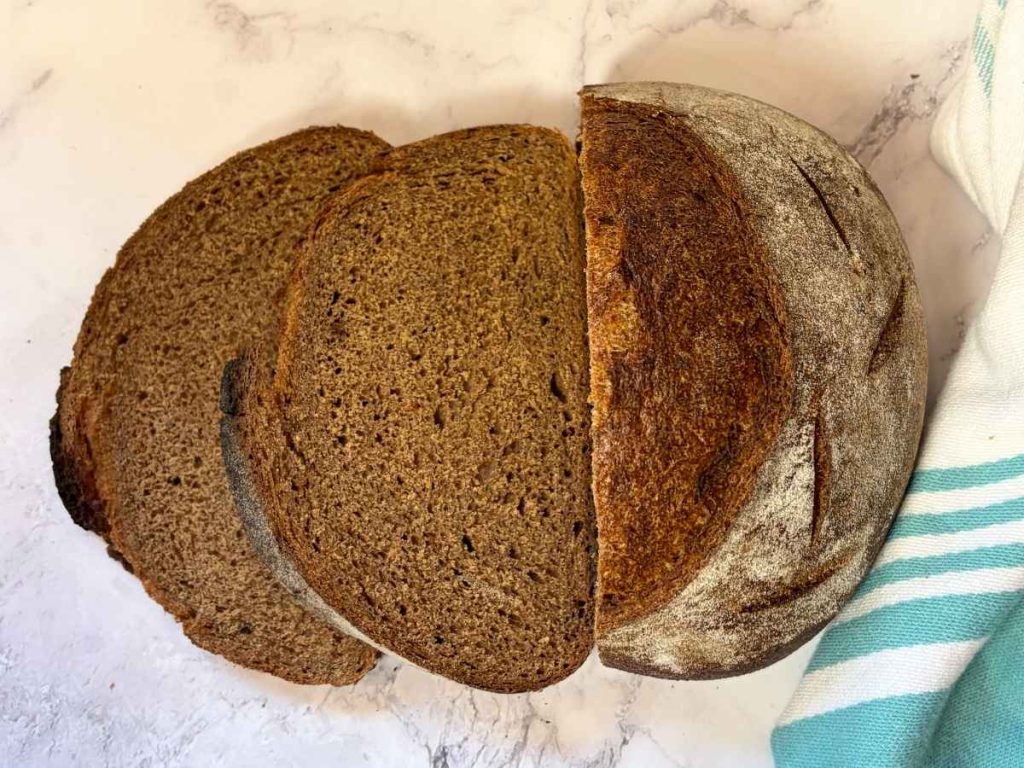
Why a 7-Minutes Score?
When you score sourdough bread after a few minutes it can help with a few things. The cut can open more because some internal pressure has been built up, it can help create a larger, more pronounced ear, and it often works well for high-hydration doughs
How to Store Fresh Milled Sourdough Brown Bread
Homemade bread doesn’t contain any preservatives like store-bought loaves, so proper storage helps keep it fresh. Allow your sourdough brown bread boule to cool completely before storing it. Keep it in a bread bag or bread box (I like to keep mine in a glass cake stand) at room temperature. Avoid refrigerating the bread unless necessary, as refrigeration can cause bread to stale more quickly. You can also freeze if needed.
If you love baking sourdough and fresh milled flour, I hope you’ll give this sourdough brown bread a try. I love the idea of taking simple ingredients like freshly milled wheat, sourdough starter, molasses, and brown sugar and turning them into something super delicious.
Serve a warm slice with butter, make a sandwich, or enjoy it alongside your favorite homemade soup. However you serve it, homemade fresh milled sourdough brown bread is a lovely way to bring a little something special to the table.
Where to Buy Wheat Berries
We love trying all kinds of wheat varieties and from all different places. Below are some of our favorites.
- Guardian Grains: Use code Hintofhomestead for 15% off your purchase
- Mockmill: Organic berries available
- Wheat Montana: Can buy on Amazon or in many stores
- Farmers’ Storehouse: Lots of varieties
- Country Life Natural Foods: Free shipping over $99
- Breadtopia: Often have durum for pasta-making
- Grand Teton: Tons of options on grains
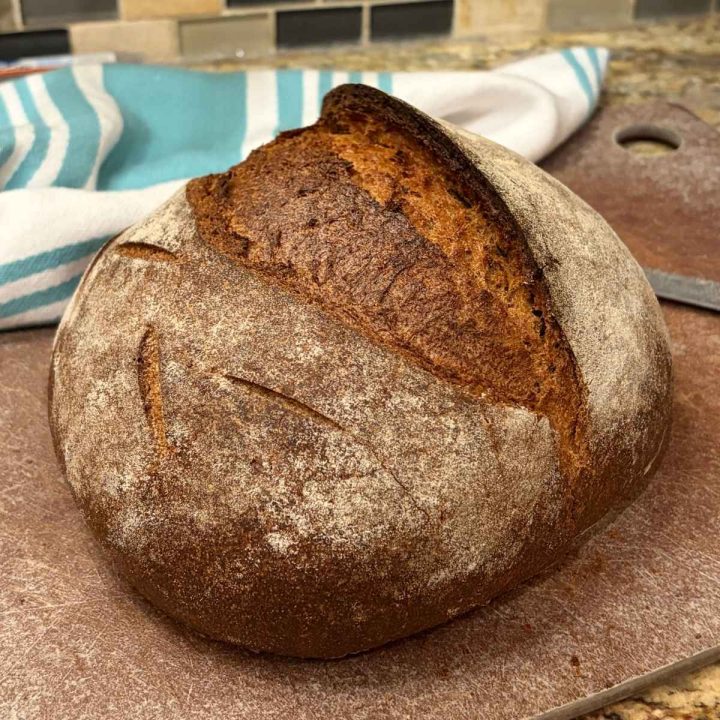
Same Day Sourdough Brown Bread with Fresh Milled Flour
Bake a same-day sourdough brown bread boule with fresh milled hard white wheat, molasses, brown sugar, and cocoa for rich, hearty flavor.
Ingredients
- 320 g water
- 120 g active sourdough starter
- 60 g molasses
- 40 g brown sugar
- 500 g hard white wheat
- 30 g coconut oil, melted
- 10 g unsweetened cocoa powder
- 10 g salt
Instructions
- Autolyze: In bowl of stand mixer, combine starter, cocoa, molasses, brown sugar, and water. Whisk together. Add fresh milled flour and mix into a shaggy dough. Cover and rest 30 minutes.
- Knead: Add melted coconut oil and salt to dough and knead for 5-10 minutes, or until windowpane is reached (or just about). Do one set of coil folds and cover.
- Bulk Rise: Let covered dough rise 4-6 hours or until dough has mounded and jiggles (this is about doubling). Bulk rise times will vary depending on house temperature.
- Laminate and Pre-Shape: Dump dough onto dusted surface and gently stretch into a large rectangle (try not to rip dough) then shape into boule. This process helps with tension and getting some bubbles into the dough. Cover with a damp towel and let rest 20 minutes.
- Final Shape: Perform a final shaping (be gentle) and place into a banneton or lined bowl. Cover with damp towel again and let rise for 1 hour.
- Chill Dough and Pre-heat: Place covered dough in freezer for about 30 minutes while you pre-heat oven (with the Dutch oven inside) to 500 degrees.
- Load the Dough: Turn oven temperature down to 450 degrees just before baking (DON'T forget this step). Dust silicone mat or parchment paper with flour and place chilled dough on it before placing in the pre-heated Dutch oven. I usually add 2 ice cubes to Dutch oven help create more steam for rising.
- Bake and 7-Minute Score: Cover and bake bread for 7 minutes. I like to wait to score bread until it has baked for 7 minutes. This is optional and you can score before baking if you prefer, but I find it very helpful for getting a good oven spring. Just be careful when scoring, as it will be extremely hot!
- Continue Baking: After scoring, continue baking covered for an additional 30-35 minutes. Check your bread's internal temperature at the 30-minute mark. It is done when it reaches about 205-210 degrees.
- Cool: Remove from oven and place on a cooling rack. Let cool completely before cutting into your bread.
Notes
- Don't use blackstrap molasses, it is much more bitter than regular molasses
- I recommend weighing your ingredients rather than measuring by volume, especially when working with whole grain flour. Measuring ingredients by weight gives you much more consistency from one loaf to the next. A digital kitchen scale is especially helpful when baking with fresh milled flour.
- You can swap the coconut oil for olive or avocado oil; I just prefer the flavor it brings
- I make this same day, but you could do an overnight bulk rise if you decrease the sourdough starter amount to around 30 grams and then add 45 grams flour and 45 grams water to the recipe
- I like same-day breads because I find that fresh milled sourdough can easily over-ferment or get really sour if you do a long cold proof
- I use the 7-minute score technique but you do not have to, you can score before baking
- I often start this bread at 8 am in order to have it ready for dinner
Nutrition Information
Yield 12 Serving Size 1 SliceAmount Per Serving Calories 219Total Fat 4gSaturated Fat 2gUnsaturated Fat 1gSodium 385mgCarbohydrates 42gFiber 6gSugar 8gProtein 8g
*This has not been evaluated by the FDA. Nutrition Label may not be accurate. This label has been automatically pulled, and ingredients may not be categorized correctly.
FAQs Same Day Fresh Milled Sourdough Brown Bread
Yes! Sourdough bread can be made in one day without requiring an overnight proof. The key is having a strong and active starter and allowing enough time for fermentation, dough development, shaping, and baking. This fresh milled sourdough brown bread recipe is designed as a same-day sourdough boule.
Yes! Hard white wheat is an excellent option for whole wheat sourdough bread. It has a milder flavor than hard red wheat, making it a nice choice for people who enjoy whole grain bread but prefer a less pronounced wheat flavor.
Not really! In this brown bread recipe, unsweetened cocoa powder is used in a small amount to contribute to the darker color and overall flavor depth. The goal is a classic brown bread flavor, not a chocolate dessert bread. Think hint of cocoa, not chocolate flavored.
Several things can contribute to dense whole wheat sourdough, including insufficient fermentation, an inactive or very acidic starter, dough that hasn’t developed enough structure, or flour that hasn’t been properly hydrated. Pay attention to dough development and fermentation rather than relying only on a set number of hours.
Yes. A Dutch oven does help trap steam around the loaf during the initial baking stage. However, other baking methods can work too like two loaf pans topped on one another.
Fresh milled whole wheat bread contains the bran, germ, and endosperm of the wheat berry, while refined white flour has had much of the bran and germ removed. Whole grains provide dietary fiber and other nutrients, making them a valuable addition to a balanced diet.
Yes! Allow the bread to cool completely, slice it if desired, and wrap it securely before freezing. You can thaw individual slices whenever you want homemade sourdough bread without having to bake another loaf. I love to double the recipe and make one to eat and one to freeze.